3-Tab vs Architectural Shingles: Cost and Lifespan
Architectural shingles cost $1,000-$2,500 more upfront than 3-tab, but the cheaper shingle costs more over time. Here's the real math.
Articles on this site may include sponsored content. If they do, it's labeled clearly - and it still has to answer a real homeowner question. Same bar as everything else here.
3-Tab vs Architectural Shingles: Which to Choose
I’ve had the same conversation three times this week. A homeowner calls, says their contractor quoted them 3-tab shingles because “they’re the same thing but cheaper.” That contractor is wrong - and the difference between these two shingles is bigger than most people realize.
Three-tab held roughly 70% of the asphalt shingle market in 2000. Today it’s under 10%. Major manufacturers are phasing it out - Owens Corning exited the Georgia market entirely in January 2025. Architectural shingles have been standard on new construction since about 2015. For good reason.
Here’s what you’re actually choosing between, what it costs over the long haul, and when the cheap option isn’t a mistake. If you are still comparing every roof covering, start with the broader types of roofing shingles guide first.
What they are and how they’re built
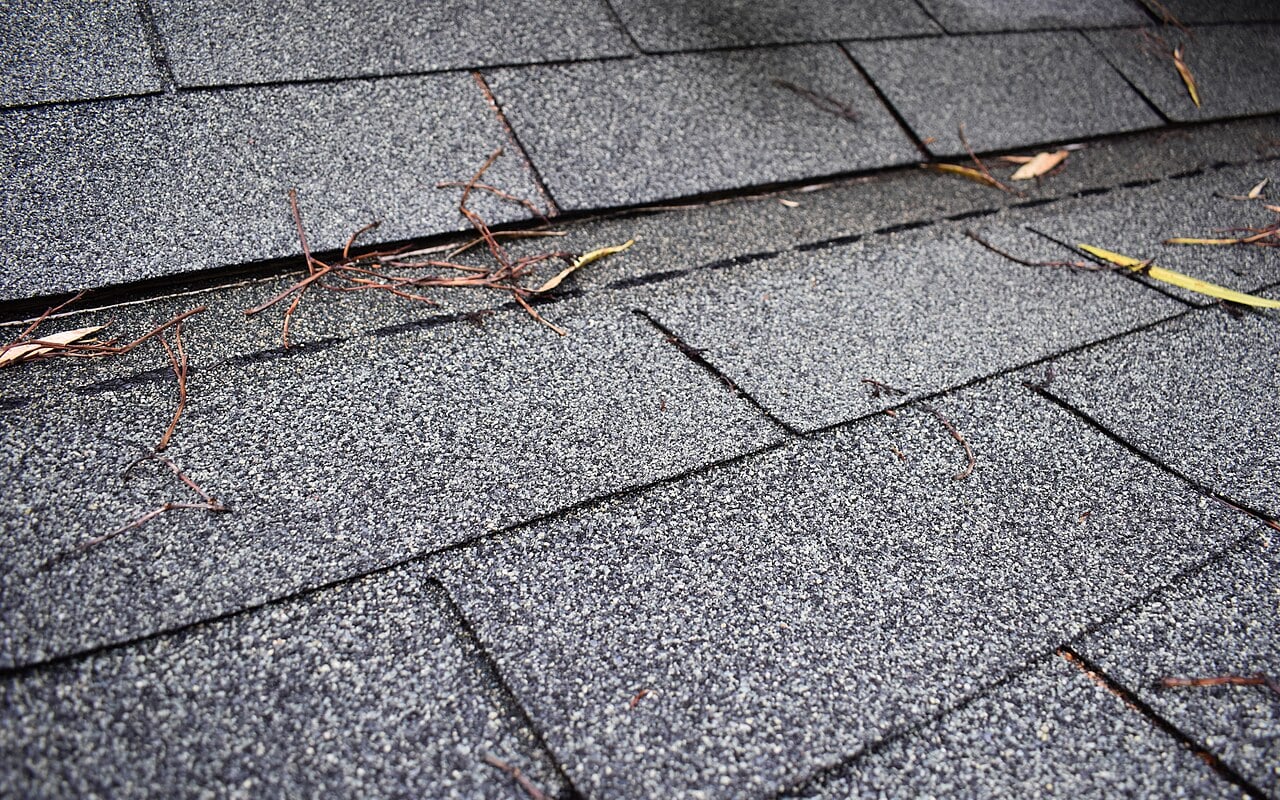
3-tab shingles are single-layer asphalt strips with three rectangular cutouts along the bottom edge. They’re essentially flat. Every shingle looks identical to the one next to it. They weigh roughly 200-250 pounds per square - a “square” being 100 square feet of roof coverage.
Architectural shingles (also called dimensional or laminate) are two or more layers of asphalt bonded together. The top layer is cut in varying widths and thicknesses. That creates a textured, shadowed look - some lines mimic wood shake, others just add visual depth. They weigh roughly 350-450 pounds per square.
That extra layer isn’t decoration. It’s the reason architectural shingles carry a 110-130 mph wind rating while 3-tab tops out around 60 mph. It’s the reason they last 25-30 years instead of 18-22. The added mass makes them heavier to carry up a ladder - your crew will feel it - but that weight translates directly into performance.
Let’s talk money
On a 2,000-square-foot roof - about 20 squares - here’s what you’re looking at for a tear-off and full replacement in 2026:
3-tab shingles: $70-$90 per square for materials. Installed, you’re looking at roughly $5,500-$7,500 total on a straightforward roof with no complicated valleys or steep pitches.
Architectural shingles: $90-$130 per square for materials. Installed, that comes to roughly $6,500-$9,500 for the same roof.
The upfront gap is real - $1,000 to $2,500 more. That’s what catches people’s attention. But it’s also a trap. For a wider budget view across materials, compare this against the best roofing materials by cost and lifespan and the longer-term asphalt vs metal roof cost-benefit breakdown.
The lifespan difference changes the math
Three-tab shingles typically last 18 to 22 years in moderate climates. Architectural shingles run 25 to 30 years with the same conditions. That 7-10 year gap is the whole story. If you want the broader material-by-material context, the roof lifespan by material guide shows how asphalt compares with metal, tile, slate, and other systems.
Let’s run a 30-year projection. You replace a 3-tab roof at year 18 for about $7,000 (conservative). Then you replace it again at year 36 - but we’re only looking at 30 years. So in that timeframe, you’ve paid for one architectural roof and are into your second 3-tab roof.
| Scenario over 30 years | 3-Tab (2 roofs) | Architectural (1 roof) |
|---|---|---|
| First roof | $6,500 (year 0) | $8,000 (year 0) |
| Second roof | $8,500 (year 18) | - |
| Total spent | $15,000 | $8,000 |
| Annualized cost | $500/year | $267/year |
That’s $233 more per year, every year, for choosing the cheaper shingle. Over 30 years you’ve spent almost twice as much. The “budget” option cost you $7,000 more.
A lot of homeowners tell me they’re saving money by going with 3-tab. They aren’t. They’re deferring the cost with interest - and the interest is steep.
Wind performance is a safety issue
This is where 3-tab’s weakness stops being an inconvenience and starts being a hazard.
Three-tab shingles rely entirely on a single strip of factory-applied adhesive and hand-nailing to stay put. When that adhesive softens in the summer heat and a storm rolls through with sustained winds over 55 mph, tabs peel up one by one. I’ve seen roofs that lost 30% of their shingles in a single afternoon squall.
Architectural shingles are heavier and use a broader nailing strip. Their wind rating of 110-130 mph isn’t theoretical - it’s tested, ASTM-certified, and required by code in many hurricane-prone areas. If you live anywhere that sees thunderstorms with 60+ mph gusts - which is most of the continental US - architectural shingles are a safety upgrade, not a luxury.
Roofing safety note: If you’re weighing 3-tab shingles and live in a region that gets high winds, factor in the risk of a mid-storm blow-off event. A damaged roof during a storm means water intrusion, ceiling damage, and potentially mold - costs that dwarf any shingle price difference. Never cut safety corners on a roof you expect to protect your family through severe weather.
The look matters more than you’d think
Three-tab shingles look flat. That’s not an opinion - it’s the nature of a single-layer product. On a roof with moderate pitch, the uniformity is obvious. On a steep roof, it screams “builder grade.”
Architectural shingles create shadow lines that break up the roof plane. From the street, the roof has depth. On a two-story home, that depth is noticeable from a block away.
If you’re planning to sell in the next five years, this matters. Most buyers in 2026 expect dimensional shingles. A 3-tab roof on an otherwise decent house reads as “the owner went cheap.” That perception hurts your resale - not because the roof doesn’t work, but because the buyer assumes the rest of the house was nickel-and-dimed too.
One place 3-tab still makes sense
I’ll be direct: for your primary residence, do not put 3-tab shingles on your roof. The math doesn’t support it, the wind performance doesn’t support it, and your home’s value doesn’t support it.
But there are a few situations where 3-tab is the right call:
Detached garages and sheds. If the structure doesn’t have living space underneath, and you’d treat a roof failure as minor instead of catastrophic, 3-tab is fine.
Rental properties you’re planning to sell within three years. You’re spending someone else’s future replacement money, but if the roof passes inspection today, it’s acceptable.
Severe budget ceilings. I mean truly severe - where the extra $2,000 means you can’t afford the tear-off at all and you’d defer the whole job. In that case, a 3-tab roof is better than a leaking roof. Just know you’ll pay for it later.
Historic districts or HOAs with specific flat-roof aesthetics. Some older neighborhoods require the uniform look of 3-tab. Check your covenants before you buy architectural.
What about warranties?
Three-tab shingles carry 20- to 25-year manufacturer warranties. Architectural shingles carry 30-year warranties, with some premium lines offering 50-year or “lifetime” coverage.
Here’s what that actually means: almost all asphalt shingle warranties are pro-rated after the first few years. A 20-year warranty on a 3-tab shingle might cover 100% of material costs in year one, then drop by 5% annually. By year 15, you’re getting 25% of the shingle cost back - no labor, no deck repair, no disposal fees. It’s better than nothing, but it’s not a replacement roof.
The real value of a longer warranty isn’t the piece of paper. It’s that you’re statistically unlikely to file a claim at all within 25 years on a quality architectural shingle. With 3-tab, you’re hoping you don’t need it within 20. Before you treat the warranty as the deciding factor, read what a roof replacement warranty actually covers.
Installation safety
Whether you choose 3-tab or architectural, here are the non-negotiables:
- Full tear-off of old layers. Never shingle over existing shingles - it hides deck rot and voids most manufacturer warranties.
- Ice and water shield in all valleys, eaves, and around all penetrations (skylights, vents, chimneys). This is code in most jurisdictions now, but some crews skip it.
- Proper nail placement: four nails per shingle in standard wind zones, six in high-wind areas. Nails driven too high or too low void wind warranties instantly.
- Adequate ventilation. Architectural shingles run hotter because they’re thicker. Without ridge vent and soffit intake, you’ll cook them from underneath and lose ten years of lifespan.
If a bid hides these details, slow down and compare it against a real roofing estimate line by line before you sign.
Safety warning: Roofing is the most dangerous job on a residential property. Falls account for over 30% of construction fatalities. If you’re doing this yourself - and I hope you’re not - use a harness anchored to a ridge anchor point, never work when shingles or decking are wet, and know that a 10-foot ladder fall can be fatal. Hire licensed, insured contractors with workers’ comp. The cheapest bid is rarely the cheapest when someone gets hurt.
The bottom line
Architectural shingles cost more today. They cost less every year you own the house. They hold up in weather that peels 3-tab off like wrapping paper. They look better, they sell better, and they’re safer.
Three-tab shingles were the standard when asphalt roofing was new. They’re a 20th-century product. Architectural shingles are what replaced them - and for good reason.
If a contractor tries to sell you 3-tab for your house, ask them why. The answer will tell you everything about whether they’re solving for your budget or their margin. If the answer sounds slippery, use the roofing contractor hiring checklist before you move forward.
Frequently asked questions
Are architectural shingles harder to install?
No - most roofers actually prefer them. The textured pattern hides minor installation imperfections. Three-tab’s straight lines magnify every misplaced nail and uneven gap. Architectural shingles forgive more.
Can I save money by installing architectural shingles over my old 3-tab roof?
Don’t do it. Most manufacturers void warranties on overlay installations. You’re also adding 350-450 pounds per square to a deck that was rated for half that weight. Tear the old roof off. It’s the only safe way.
Does my insurance cover the upgrade from 3-tab to architectural?
If you file a claim, most policies cover “like kind and quality.” If you had 3-tab, the insurer pays for 3-tab replacement. You pay the difference to upgrade. Some carriers offer “building code” endorsements that help if local code now requires architectural shingles - check your policy.
How do I know if my roof deck can handle architectural shingles?
Architectural shingles weigh roughly 100-200 pounds more per square than 3-tab. That’s 2,000-4,000 additional pounds on a 20-square roof. A licensed structural contractor can verify your deck and trusses are rated for the load. Most modern decks are fine. Older homes with lightweight framing should be checked.
Do architectural shingles reduce home insurance premiums?
Some carriers offer modest discounts for impact-resistant architectural shingles (Class 4 rating). Standard architectural shingles may not qualify - ask about specific impact-resistant lines like Owens Corning Duration Storm or CertainTeed Landmark IR. The discount is small but covers part of the upgrade cost over time.
What’s happening with 3-tab availability?
It’s shrinking fast. Owens Corning discontinued 3-tab in Georgia in early 2025. GAF and CertainTeed have reduced production. Within five years, 3-tab will be hard to find outside specialty supply houses. If you’re building a new roof, you’re making a decision that may lock in your supply chain for the next replacement cycle.
Is there ever a good reason to choose 3-tab over architectural for a primary residence?
Only if budget is so tight that the difference means not replacing the roof at all. In that case, a 3-tab roof beats a leaking roof - barely. But don’t convince yourself it’s a smart financial move. Run the 30-year numbers first. They’re not close.