Best Roofing Materials Compared (2026 Guide)
Asphalt, metal, tile, wood, and slate — compared by cost, lifespan, climate fit, and who each one is actually best for.
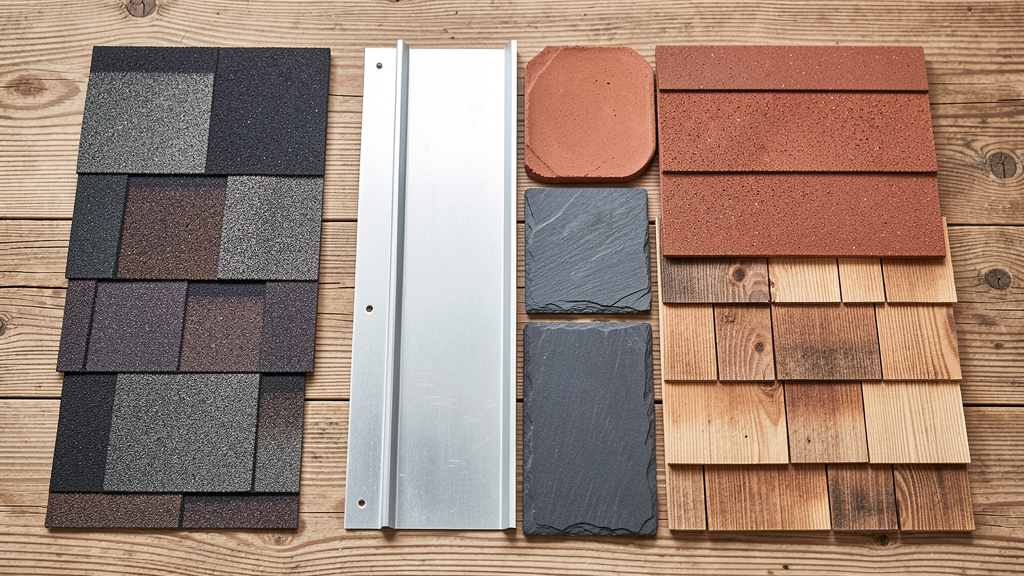
The best roofing material for your house isn’t the most expensive one, or the one your neighbor chose, or the one that ranked first in a magazine article. It’s the one that fits your climate, your budget, your house structure, and how long you’re staying.
This guide compares the five most common materials on the factors that actually matter for homeowners.
Quick comparison table
| Material | Installed cost per sq ft | Lifespan | Weight | Best for | Biggest downside |
|---|---|---|---|---|---|
| Asphalt shingles | $4–$7 | 18–25 years | Light | Most homeowners; tight budgets | Worn out fastest |
| Metal (standing seam) | $9–$16 | 40–70 years | Medium | Long-term owners; hot/harsh climates | Higher upfront cost |
| Clay/concrete tile | $7–$14 | 50–100 years | Heavy | Warm, dry climates; Spanish/Mediterranean style | Structure needs reinforcement |
| Wood shake | $7–$12 | 20–35 years | Medium | Rustic/cottage aesthetic; dry climates | High maintenance; fire risk |
| Natural slate | $15–$30 | 75–150 years | Very heavy | Historic homes; owners staying 30+ years | Cost; few qualified installers |
Asphalt shingles: the practical default
What you get:
- Lowest upfront cost of any standard material
- Color variety and style options (3-tab, architectural, designer)
- Easy to repair and replace individual shingles
- Broad contractor availability
What you trade:
- Shorter lifespan than other materials
- Vulnerability to high winds and temperature swings
- Ongoing granule loss after year 10
- Highest cost per year over the long term
Best for: Budget-conscious homeowners, those staying under 15 years, and standard suburban homes that don’t need a distinct architectural statement.
Asphalt subtypes:
| Subtype | Cost per sq ft | Look | Lifespan |
|---|---|---|---|
| 3-tab | $4–$5 | Flat, uniform | 15–20 years |
| Architectural | $5–$7 | Dimensional, textured | 22–30 years |
| Luxury/designer | $7–$10 | Slate or shake mimic | 30–40 years |
Architectural shingles are the default choice for most replacements in 2026. 3-tab is gradually being phased out by manufacturers.
Metal roofing: the long-term value play
What you get:
- Longest functional lifespan of any standard material
- Excellent wind, hail, and fire resistance
- Reflects heat; reduces cooling costs in warm climates
- Often counts for insurance discounts
- Recyclable at end of life
What you trade:
- 2–3x the upfront cost of asphalt
- Expansion/contraction noise during temperature swings (overplayed concern with modern systems)
- Fewer installers qualified in metal-specific techniques
- Denting from very large hail on softer metals (aluminum, copper)
Best for: Homeowners staying 20+ years, properties in wildfire or high-wind zones, and anyone prioritizing low lifecycle cost over low upfront cost.
Metal subtypes:
| Type | Typical cost | Notes |
|---|---|---|
| Standing seam | $10–$16 | Concealed fasteners; premium look; longest lifespan |
| Metal shingles | $8–$12 | Mimic asphalt or tile; easier install |
| Stone-coated steel | $9–$14 | Textured granule surface; popular in Southeast and West Coast |
Clay and concrete tile: the climate specialist
What you get:
- Exceptional lifespan (tiles)
- Excellent fire rating
- Distinctive aesthetic that adds curb appeal in appropriate architecture
- Low thermal transfer; keeps attics cooler
What you trade:
- Heavy: requires structural assessment; many homes need reinforcement
- Brittle: walking on tiles for maintenance or repair usually cracks them
- Underlayment replacement at 20–30 years requires full tile removal
- Higher install cost due to skilled labor requirements
Best for: Warm, dry climates; homes with Spanish, Mediterranean, or Southwestern architecture; owners staying 30+ years.
Clay vs. Concrete:
| Feature | Clay | Concrete |
|---|---|---|
| Color | Natural earth tones; doesn’t fade | Pigmented; may fade slightly over decades |
| Weight | Lighter | Heavier |
| Durability | More brittle; cracks from impact | More resilient to foot traffic and impact |
| Cost | Slightly higher | Slightly lower |
Wood shake and shingle: the high-maintenance aesthetic
Cedar shakes offer a rustic, organic look that’s difficult to replicate with synthetic materials. But they demand more attention than any other standard roofing material.
What you get:
- Natural, textured appearance unmatched by synthetics
- Good insulation properties
- Sustainability (if sourced from certified forests)
What you trade:
- Requires treatment every 2–4 years to prevent rot
- Fire risk: restricted or banned in many wildfire-prone areas
- Susceptible to moss, mold, and insect damage in humid climates
- Lifespan among the shortest of premium materials
Best for: Dry climates; historic or cottage-style architecture; homeowners willing to perform or pay for regular maintenance.
Critical note: Check your local building codes. Wood shake is prohibited in many California counties and increasingly restricted in Colorado, Oregon, and other wildfire-prone regions.
Natural slate: the forever roof. If your house can handle it
Slate is the longest-lasting and most expensive standard residential roofing material.
What you get:
- Lifespan measured in centuries for high-quality slate
- Virtually impervious to weather, fire, and insects
- Minimal maintenance beyond occasional flashing checks
- Distinctive, high-end appearance
What you trade:
- Cost: 3–6x asphalt upfront
- Weight: often requires structural reinforcement
- Availability: limited quarries and few experienced installers
- Repair complexity: matching slate 50 years later is difficult
Best for: Historic homes, owners staying indefinitely, and properties where architectural authenticity matters more than budget.
The climate filter
Your location eliminates some options quickly.
| Climate zone | Best choices | Avoid |
|---|---|---|
| Hot, dry (Southwest) | Tile, metal | Wood shake (dries out, cracks) |
| Hot, humid (Southeast) | Metal, architectural asphalt | Wood shake (mold, rot) |
| Cold, snowy (Northeast) | Architectural asphalt, metal, slate | Tile (freeze-thaw cracking) |
| High wind (Coastal) | Metal, architectural asphalt | 3-tab asphalt |
| Wildfire risk (West) | Metal, tile, slate | Wood shake |
Cost over time: the lifecycle view
The material with the lowest upfront cost is rarely the cheapest over the life of the home.
| Material | Upfront cost (avg. U.S. home) | 40-year cost (1–2 replacements) |
|---|---|---|
| Asphalt | $7,500–$12,000 | $20,000–$32,000 |
| Metal | $18,000–$32,000 | $20,000–$35,000 (often just 1 roof) |
| Tile | $15,000–$28,000 | $22,000–$35,000 (underlayment replaced once) |
| Wood | $14,000–$24,000 | $28,000–$48,000 (2 roofs + maintenance) |
| Slate | $30,000–$60,000 | $32,000–$65,000 (often just 1 roof) |
A metal roof on a long-term home often costs less over 40 years than two asphalt roofs.
Structural considerations before you choose
Not every house can support every material.
- Tile and slate: Require structural assessment. Weights of 800–1,500 lbs per square may exceed what your rafters and decking were built for.
- Metal: Usually fine on standard structures; metal is lighter than tile and comparable to asphalt.
- Wood shake: Similar weight to asphalt; usually no structural concern.
If you’re switching from asphalt to tile or slate, budget $2,000–$8,000 for structural reinforcement in the estimate.
The bottom line
For most homeowners in 2026, the decision narrows to two options:
Architectural asphalt shingles if you’re weighing upfront cost, selling within 15 years, or in a moderate climate without extreme weather exposure.
Standing seam metal if you’re staying long-term, in a harsh climate, or prioritizing total lifecycle cost over sticker price.
Tile, slate, and wood shake serve specific architectural and climate niches. They’re not wrong choices, but they’re more specialized than the market makes them appear.
If you’ve narrowed it to asphalt vs. Metal, see our detailed breakdown of metal roof vs asphalt shingles for a side-by-side analysis.
Frequently asked questions
What’s the most energy-efficient roofing material?
Metal and white/light tile reflect the most solar heat, reducing cooling costs. For asphalt, “cool roof” shingles with reflective granules are available but less effective than metal.
Can I mix materials on one roof?
Yes, sometimes. It’s common to use metal on steep or complex sections and asphalt on standard planes. But it requires careful transitions and skilled flashing work. Most homeowners choose one material for consistency.
Does a new roof add resale value?
A functional new roof helps buyers check a box, but premium materials rarely recoup their full cost in sale price. Spend on the material that’s right for your ownership timeline, not the next buyer.
Is synthetic slate worth considering?
Synthetic slate (rubber or plastic composite) is lighter and cheaper than natural slate, but lifespan is 30–50 years, not 100+. It’s a reasonable middle ground for aesthetic slate looks without structural reinforcement.
Which material is best for solar panels?
Metal standing seam is ideal: panels clamp directly to seams without penetrating the roof. Asphalt works fine but requires shingle-penetrating mounts. Tile requires specialized mounting systems that cost more.