Roof Repair vs Replacement: Which Do You Need?
A simple decision framework based on roof age, damage extent, and how long you plan to stay. No sales pitch.
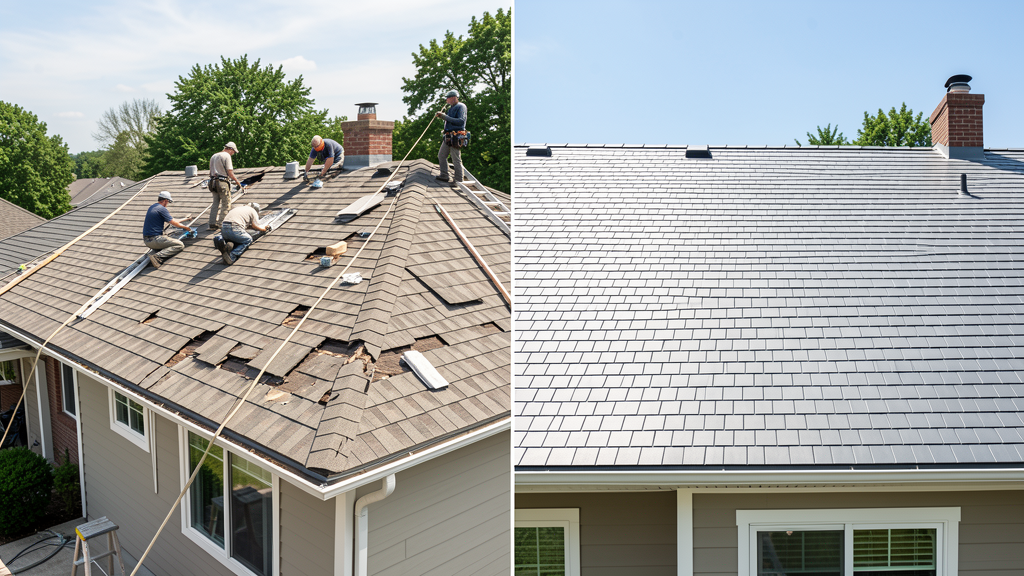
The question every homeowner faces at some point: patch it, or pull it off and start over?
The answer depends on three things. How old the roof is, how widespread the damage is, and how long you’re staying in the house. Get those right, and the decision is usually clearer than contractors make it sound.
Start with age
| Roof age | Typical advice |
|---|---|
| Under 10 years | Repair almost always makes sense |
| 10–18 years | Depends on damage extent and cost per year |
| 18–25 years | Replacement is usually the better long-term value |
| Over 25 years | Replacement, unless the damage is trivial and temporary |
Age isn’t the only factor, but it’s the foundation. A 7-year-old roof with one damaged section still has 15+ years of life left. Replacing it early wastes that remaining value. An 18-year-old roof with moderate damage is already approaching its expected end. Patching it is betting on borrowed time.
Then look at damage extent
Repair makes sense when:
- The damage is limited to one section or a few shingles
- The decking underneath is dry and solid
- The flashing and underlayment are intact
- The repair costs less than 20% of a full replacement
Replacement makes sense when:
- Damage covers more than 25–30% of the roof surface
- Multiple sections show curling, cracking, or granule loss
- The decking or underlayment is compromised
- You’ve already repaired the same area once
- The roof is past 75% of its expected lifespan
Contractors sometimes push replacement because it’s more profitable. That doesn’t mean they’re wrong. It means you should verify their reasoning against these criteria before agreeing.
Run the cost-per-year test
This is the simplest way to cut through the noise.
Suppose your roof is 14 years old. A repair costs $1,800. A full replacement costs $9,500. The roof has an expected total lifespan of 22 years.
| Option | Cost | Remaining life | Cost per remaining year |
|---|---|---|---|
| Repair and keep | $1,800 | 8 years | $225/year |
| Replace now | $9,500 | 22 years | $432/year |
In this case, repair wins on cost per year. Even though replacement gives you a new roof.
Now change the numbers. The roof is 19 years old. Same costs.
| Option | Cost | Remaining life | Cost per remaining year |
|---|---|---|---|
| Repair and keep | $1,800 | 3 years | $600/year |
| Replace now | $9,500 | 22 years | $432/year |
Replacement wins. The repair is expensive relative to the little time you’re buying.
This isn’t the only consideration, but it’s a useful gut check when you’re staring at two estimates.
Factor in your timeline
Selling within 2–3 years: A repair is usually enough. Buyers care more about age and condition than whether the roof is brand new. A roof that’s been professionally repaired and documented satisfies most inspectors. Just disclose the age honestly.
Staying 10+ years: Replacement is almost always the cheaper long-term play. You absorb the full cost of the new roof, but you also capture its entire lifespan. And you avoid the hassle of a mid-ownership repair that will likely need redoing.
Planning to refinance or take a HELOC: A roof in poor condition can block a home equity line. Lenders want to know the home is properly maintained. If you’re using the roof as collateral for financing, factor that into your timing.
Signs repair is throwing money away
Some situations make replacement the obvious call, even if the damage looks minor:
- You’re repairing the same area twice. If shingles keep failing in the same spot, the underlying problem (ventilation, decking, or flashing) isn’t getting fixed.
- Granules are coming off in handfuls. Granule loss can’t be repaired. It means the asphalt layer is exposed and deteriorating.
- The roof has no underlayment. Older homes sometimes skip underlayment. No underlayment means no secondary water barrier. Even small leaks reach the interior fast.
- Your attic has mold or rot. Once water has reached the insulation and framing, the damage is structural. Surface repairs won’t stop the moisture source.
When a patch is the right short-term move
Sometimes you need to buy time. A strategic patch is legitimate in these cases:
- You’re waiting for insurance approval after a storm
- You’re saving for a full replacement and need 6–12 months
- You’re selling in under a year and the roof has life left
- The damage is from a single event (falling branch, wind-lifted section) and the rest of the roof is sound
In these cases, get a written scope of the patch. Know exactly what was fixed and what wasn’t. Don’t let a contractor imply that a patch fixes a systemic problem.
Getting honest estimates
Contractors have a financial incentive to sell replacement over repair. Protect yourself:
- Get three estimates — at least one from a company that does both repair and replacement
- Ask for photos — any decent contractor documents the damage with close-up shots from the roof
- Ask what happens if you repair — a trustworthy contractor will walk through the trade-offs honestly
- Check what the repair includes — does it include underlayment replacement, decking repair, or just shingles? A $900 repair that skips the underlayment is worse than a $1,500 repair that fixes the whole assembly
Insurance and timing
If your damage is from a covered event (hail, wind, falling trees) file the claim before you hire a contractor. The adjuster’s report determines what insurance pays. Once you sign a contract, you’ve locked in your out-of-pocket cost regardless of what insurance covers.
Don’t let a contractor pressure you into signing before the adjuster sees the damage. This is a common tactic. The contractor wants the job before you know the insurance number.
The bottom line
Repair vs. Replacement isn’t a mystery. It’s a math problem with a few variables: age, extent, cost, and how long you’re staying. Young roof + isolated damage + staying long-term = repair. Old roof + widespread wear + moving soon = replacement.
The real risk isn’t choosing wrong. It’s choosing under pressure, without the numbers, because water is dripping into your living room. Inspect your roof before it’s an emergency. Get your estimates before you need them. And make the decision on your own timeline, not a contractor’s.
If you’re unsure whether your roof needs attention at all, start with our guide on the [11 signs you need a new roof](/blog/11-signs-you-need-a-new-roof).
Frequently asked questions
How much does a typical roof repair cost?
Most homeowners pay $400–$1,500 for a standard repair: replacing a section of shingles, resealing flashing, or patching a small leak. Complex repairs (decking replacement, valley repair, or chimney flashing) can run $2,000–$4,500.
Can I replace just part of my roof?
Yes, but it’s not always wise. Partial replacement works when the damage is limited to one slope or section and the rest of the roof is relatively young and healthy. The downside: matching new shingles to weathered old ones is difficult. The repair area may always look slightly different.
Does insurance pay for repair or replacement?
Insurance pays for sudden, accidental damage caused by covered perils. Wind, hail, fire, falling trees. It does not pay for normal wear, age-related failure, or maintenance issues. If hail destroys part of your roof, insurance covers the loss. If a shingle wore out after 22 years, that’s on you.
How long does a roof repair last?
A proper repair on a healthy roof should last as long as the roof itself. A patch on an aging roof is a shorter-term fix. Typically 2–5 years, depending on the roof’s overall condition and your climate.
Should I get a roof inspection before selling?
Yes. A pre-listing inspection lets you fix problems on your own schedule with your own contractor. Post-offer inspections give the buyer leverage. Fixing in advance almost always costs less than the credit buyers negotiate.