11 Signs You Need a New Roof (With Photos)
The honest visual checklist homeowners use to decide between repair and replacement. No ladders required.
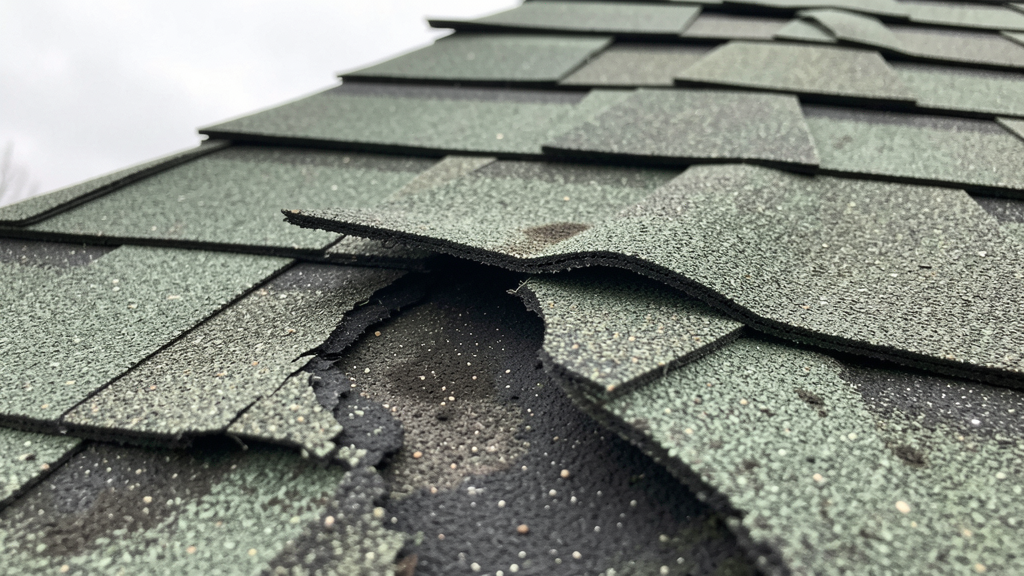
Most homeowners notice their roof is failing only after water shows up inside the house. By then, the damage is no longer cosmetic. You can catch it earlier (sometimes from the ground) if you know what to look for.
Here are the 11 signs that point toward replacement, ranked from the easiest to spot from the sidewalk to what you’ll see in the attic. If you hit three or more, it’s time to stop patching and start planning.
1. Your shingles are curling at the edges
Curling happens in two forms: cupping (edges turn upward) and clawing (edges stay down but the center lifts). Both mean the asphalt is drying out and losing its bond to the fiberglass mat underneath.
Cupping is the earlier stage. Clawing is closer to the end. Both compromise how water sheds off the roof. Once curling starts, a shingle won’t lay flat again. At best, you’re buying months. At worst, you’re one windstorm from a leak.
2. You’ve got bald spots where granules used to be
Granules are the rough, sand-like coating on top of asphalt shingles. They protect the asphalt from UV damage. When they wash off, the shingle ages fast.
Check your gutters. If you see what looks like coarse black sand collecting, your roof is shedding granules. Also look for uneven dark patches on the roof surface. Those are spots where granules have worn away and the asphalt is showing through.
A new roof doesn’t lose granules. A 15-year-old roof sheds them steadily. A roof that’s balding in patches is telling you it’s cooked.
3. Cracks are running through the shingles
Thermal cycling does this. Your roof heats up in the day and cools at night, expanding and contracting. Eventually, the asphalt gets brittle and cracks.
Cracking is different from splitting. Cracks are surface-level and follow a random pattern. Splits run deeper and often follow the shingle joints. Both let water in. The difference is mostly academic for a homeowner. Either one means replacement is coming.
4. Your neighbors are replacing their roofs
Houses in the same subdivision were usually built within a few years of each other with the same materials. If two or three neighbors have new roofs, yours is likely the same vintage.
This isn’t a technical clue, but it’s a practical one. Roofing crews are already in your neighborhood. Material delivery is nearby. And your roof is probably sitting on the same batch of shingles that just failed next door.
5. You see moss or algae growing
Moss holds moisture against the shingle surface. In freeze-thaw climates, that moisture expands, lifting and cracking shingles. Algae is mostly a cosmetic issue. The black streaks you see are gloeocapsa magma, a bacteria that feeds on limestone filler in shingles.
Algae doesn’t mean your roof is failing, but heavy moss growth does. If you can see moss thriving in multiple sections, the roof is staying wet longer than it should. That’s a sign of poor drainage, granule loss, or both.
6. Flashing is cracked, lifted, or missing
Flashing is the metal (or sometimes rubber) that seals joints. Where the roof meets a wall, around chimneys, in valleys, and at vent pipes. It’s the first place water finds if it’s looking for a way in.
Lifted or missing flashing is an easy patch job if your shingles are still healthy. But if the shingles around the flashing are also brittle or curling, the problem isn’t the flashing alone. The whole system is aging out.
7. Your roofline is sagging
A sagging roofline is structural. It means the decking underneath the shingles (the plywood or OSB) has absorbed moisture, softened, and started to bow.
This one you can see from the street. Stand across the street and look at the ridgeline. It should be straight. A dip or wave between rafters means water has reached the decking. At this point, you’re not just replacing shingles. You’re replacing structure.
8. You can see daylight from inside the attic
Go up during the day, turn off the attic lights, and look up. If you see daylight coming through the roof boards, water can get through the same holes.
A few pinholes of light around a chimney or vent is normal. Those are sealed externally. But light streaming through the field of the roof means gaps in the decking, missing shingles, or both. This is a hard-stop sign. Don’t wait on this one.
9. Your energy bills have climbed with no other explanation
A failing roof loses insulation value. Gaps in decking, wet insulation, and poor attic ventilation all force your HVAC to work harder.
If you’ve ruled out windows, doors, and thermostat settings and your bills are still up 15–20% from the same month last year, the roof may be the culprit. Wet insulation doesn’t insulate. A compromised roof lets conditioned air out and outdoor air in.
10. Your gutters are pulling away from the fascia
Gutters that sag or separate from the house mean the fascia board they’re attached to is rotting. Usually from water running behind the gutters instead of into them.
That water is coming from the roof edge. It means your drip edge is failing, your shingles aren’t extending far enough past the fascia, or your gutters are clogged and overflowing. Whatever the cause, the roof edge and the fascia are both taking damage.
11. The roof is past its 20th birthday
Age alone isn’t a sign of failure, but it is a sign of diminishing returns. Most asphalt shingle roofs last 18–25 years. At year 20, you’ve entered the zone where every repair is a bet against probability.
A 20-year-old roof that looks perfect on the surface is still sitting on decking, underlayment, and flashing that’s two decades old. The shingles may be the last thing to fail. The rest of the system doesn’t have another 20 years in it.
How many signs before you replace?
| Number of signs | Recommended action |
|---|---|
| 1–2 | Schedule a professional inspection; patch if appropriate |
| 3–4 | Plan for replacement within 1–2 years; start budgeting |
| 5+ | Schedule replacement estimates; repairs are likely throwing money away |
This is a rough framework, not a rule. A roof with one sign (a sagging roofline) is an emergency. A roof with three signs and an active leak needs action in weeks, not years.
When repair still makes sense
Not every aging roof needs immediate replacement. Repair is the right call in a few cases:
- The damage is isolated. One section of wind-lifted shingles over a sound deck is patchable.
- Your roof is under 12 years old. If a 10-year-old roof has one problem area, repair is usually cheaper than the remaining life you’d waste by replacing early. If you’re selling in under two years, a cosmetic repair gets you through inspection without a $15,000 hit. Disclose the roof age honestly. If you’re unsure how to hire the right person, our guide on how to choose a roofing contractor covers what to look for.
- You can’t finance it yet. A tarp and strategic patching can buy 6–12 months while you line up a home equity line or savings. Budget for the replacement, don’t ignore it.
The bottom line
Your roof sends signals before it sends water into your living room. Most homeowners can spot the early ones from the ground with a pair of binoculars and 15 minutes. The question isn’t whether you’ll replace your roof. Every roof gets replaced eventually. The question is whether you control the timing, or the roof controls it for you.
Replacing on your own schedule costs less. Contractors charge more for emergency work. You have time to compare estimates. And you avoid the collateral damage (drywall, flooring, electrical) that comes with waiting too long.
If you’re weighing whether to repair or replace, see our guide on roof repair vs replacement for a decision framework.
Frequently asked questions
How often should I check my roof for these signs?
Twice a year: once in spring after the last freeze, once in fall before winter. Add a check after any major wind or hail event.
Can I inspect my roof myself, or should I hire someone?
Ground-level inspection is safe and useful. That’s where you’ll see curling, missing shingles, and sagging. For attic checks and close-up views, a professional inspector is worth the $150–$300. They also spot code violations and ventilation issues you won’t catch.
Does homeowners insurance cover roof replacement?
Only for sudden, accidental damage. Wind, hail, falling trees. Normal wear and tear isn’t covered. If you think you have storm damage, file a claim and get a professional inspection before the adjuster arrives.
How much does a full roof replacement cost?
In 2026, most U.S. Homeowners pay $7,000–$14,000 for an asphalt shingle roof, depending on size, pitch, and region. Size matters more than anything. A 1,500-square-foot roof costs roughly half what a 3,000-square-foot roof costs.
What if I only see one or two signs?
Address them. A single active leak is still an active leak. But one or two isolated issues on a relatively young roof usually point to a repair, not a full replacement.