Do You Need a Permit to Replace Your Roof?
A plain-spoken guide to roofing permits: when they're required, how much they cost, what inspections cover, and what happens when homeowners skip them.
Articles on this site may include sponsored content. If they do, it's labeled clearly — and it still has to answer a real homeowner question. Same bar as everything else here.
Do You Need a Permit to Replace Your Roof?
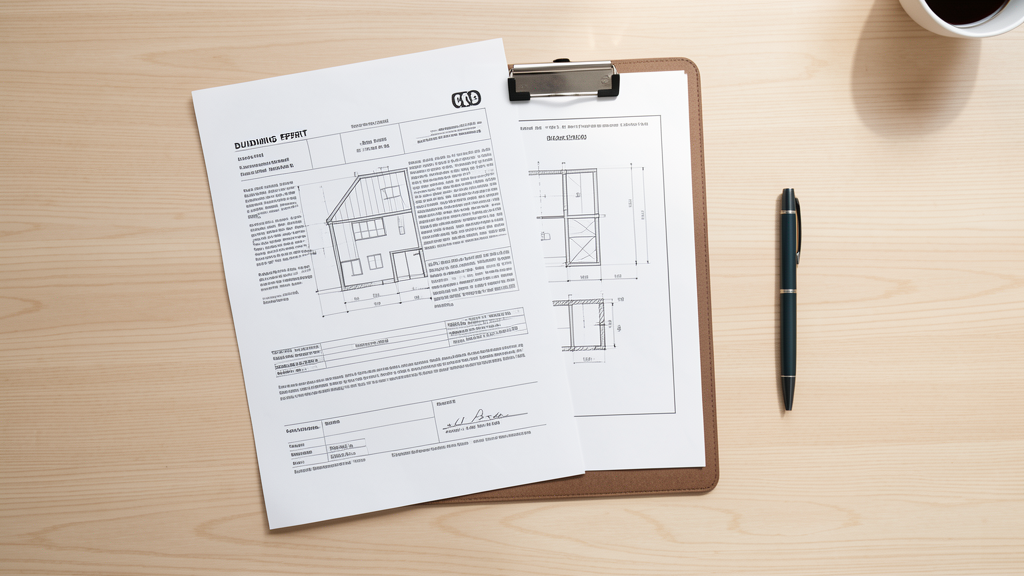
Short answer: yes. In roughly 90 percent of U.S. jurisdictions, a full roof replacement requires a building permit. Minor repairs — swapping a few damaged shingles, patching a valley, resealing a pipe boot — usually don’t. The dividing line is somewhere around 100 to 200 square feet, or 10 to 25 percent of your total roof area, depending on where you live.
Builders grumble about red tape. I get it. But building departments aren’t out to make your life harder for sport. A permit creates a public record that the work meets code — your only independent verification that the new roof won’t fly off in the next windstorm. When you’re dropping ten grand or more to strip your house to the decking, the permit is cheap insurance, not an obstacle.
Full replacement vs. minor repair: where the line is
The International Residential Code (IRC) Section R907 governs most re-roofing. If you’re removing existing roofing down to the deck and installing new material, you need a permit. Adding a new layer over old shingles — a “recover” — requires a permit in most places too, though a handful of rural areas still allow one overlay. That’s shrinking fast.
Minor repairs don’t trigger permits, but “minor” has limits:
- Under 100 square feet of repair: typically exempt.
- 100 to 200 square feet, or more than 10 percent of the roof: permit required in most cities and counties.
- More than 25 percent of the roof surface repaired within 12 months: Chicago, much of Illinois, and a growing list of cities treat this as a full replacement and demand a permit.
- Structural work of any size: replacing decking, modifying rafters, or anything that changes load-bearing — permit required, full stop.
If you’re patching hail damage across two slopes and the square footage adds up, call the building department. Your contractor’s opinion is just an opinion. The building official’s opinion is law. Most municipalities publish their thresholds online. If you can’t find yours, a five-minute phone call beats a stop-work order and a fine.
What a roof permit actually costs
According to 2026 data from PermitCalculator, which tracked 26 U.S. cities across 17 states, the average roof replacement permit fee is $226, with a median of $163. The range is wide: as low as $27 in San Antonio, Texas, and as high as $688 in Portland, Oregon. Most homeowners land between $150 and $500.
Here’s the rough shape by state:
| State / Region | Permit for Replacement? | Typical Fee Range | Notes |
|---|---|---|---|
| Alabama | Yes | $150–$350 | Birmingham, Huntsville require permit |
| Arizona | Yes | $200–$450 | Phoenix flat fee; Tucson valuation-based |
| California | Yes | $250–$800 | LA County and Bay Area exceed $600 |
| Colorado | Yes | $150–$400 | Denver metro valuation-based |
| Florida | Yes | $200–$600 | High-wind zones need enhanced inspection |
| Georgia | Yes | $150–$350 | Atlanta-area fees trend higher |
| Illinois | Yes | $175–$400 | Chicago 25% rule triggers mandatory permit |
| Indiana | Yes | $150–$325 | Generally flat-rate |
| Louisiana | Yes | $200–$450 | Act 239 (2025): permit + inspection for all reroofs |
| Massachusetts | Yes | $200–$500 | Coastal towns add wind-mitigation review |
| Michigan | Yes | $150–$350 | Detroit suburbs valuation pricing |
| Minnesota | Yes | $175–$375 | Ice-barrier requirements add steps |
| Nevada | Yes | $200–$400 | Clark County (Las Vegas) tiered |
| New Jersey | Yes | $200–$450 | Some townships charge plan-review fees |
| New York | Yes | $200–$600 | NYC and Long Island far exceed upstate |
| North Carolina | Yes | $150–$350 | Charlotte and Raleigh have online portals |
| Ohio | Yes | $150–$300 | Generally lower-cost state |
| Oregon | Yes | $250–$500 | Portland metro fees skew high |
| Pennsylvania | Yes | $175–$375 | Philadelphia requires separate trade permits |
| Tennessee | Yes | $150–$300 | Nashville, Memphis near top of range |
| Texas | Yes | $150–$500 | Wide variance; Houston, DFW higher |
| Washington | Yes | $250–$550 | Seattle-area among highest in region |
| Wisconsin | Yes | $150–$325 | Milwaukee-area exceeds rural counties |
| Repairs over 100–200 sq ft | Varies | $70–$250 | Threshold depends on local ordinance | | Recover (overlay) | Yes in most areas | $100–$300 | Some areas still permit one overlay |
Fees are approximate based on 2025–2026 published schedules. Confirm with your local building department before budgeting.
Permit fees are set at the municipal level, not the state level. Two houses ten miles apart in different counties can see different prices. Some cities also scale fees with project valuation — a $30,000 standing-seam metal roof costs more to permit than a $10,000 asphalt shingle job on the same house.
How the permit process actually works
Your contractor should pull the permit. I’ll come back to why that matters, but the process is the same either way:
- Application. Usually online. Requires scope of work, contractor license number, and proof of insurance.
- Fee payment. Credit card or check. Some jurisdictions scale to project valuation.
- Plan review (if needed). Larger jobs or code upgrades may need a plans examiner. Adds 3 to 10 days.
- Permit issuance. Standard re-roofs often issue within 24 to 48 hours.
- Post the permit. Legally required on site before work begins.
- Inspections. Mid-project dry-in and a final after shingles and trim are installed.
In backlogged metros — Los Angeles, Seattle, Austin — plan for a week or two. Don’t let tear-off begin until the permit is posted. If your jurisdiction requires in-person submission, bring two sets of drawings, the contractor’s license, and proof of insurance. Rural areas without online portals often process same-day at the county office.
What happens when you skip the permit
Three outcomes. None of them work in your favor.
Insurance problems. This is the big one. If your insurer discovers unpermitted work during a claim, inspection, or renewal, they can deny roof-related coverage. That $12,000 roof you paid for becomes worthless when a storm rolls through. Residential roof claims hit $31 billion in 2024, and insurers are scrutinizing harder than ever. An unpermitted roof is an easy denial.
Resale liability. Buyers’ agents and title companies check permit history routinely now. An unpermitted roof becomes a disclosure problem. You’ll either need a retroactive permit — more expensive and may require partial disassembly — or you’ll take a price concession at closing. Some lenders won’t clear a mortgage with unresolved permits. I’ve seen deals fall apart over a $250 permit the seller should have pulled years earlier.
Municipal enforcement. A nosy neighbor, a post-storm inspection, or a routine property survey can trigger a stop-work order. Fines run from $250 to $2,500 depending on jurisdiction. If the inspector finds code violations, you may have to remove and reinstall portions of the roof to prove compliance. The cost of doing it twice always exceeds the cost of doing it right once.
Pull the permit. Pay the fee. Sleep at night.
Who pulls the permit — and why it matters
Your contractor should pull the permit. Full stop.
When a licensed contractor pulls the permit, their license number ties to the record. If they abandon the job or install it wrong, that paper trail gives you actual leverage with the state contractor board. Without it, you’re just a homeowner with a bad story.
A contractor who refuses to pull the permit is telling you something. They may be unlicensed, uninsured, or operating under a suspended license. They may be dodging workers’ comp or tax reporting. None of these are yellow flags. They’re reasons to fire that contractor before the first shingle hits the truck.
Get the permit number in writing before work starts. Check it on your city’s permitting portal. Confirm the contractor’s name and license match the permit holder. If they don’t, stop the job and ask why.
HOAs, historic districts, and other approval layers
Your city building permit isn’t the only approval you need. You may also need sign-off from:
- Homeowners associations (HOAs). Architectural review committees often require pre-approval for color, material, or profile changes. Some ban metal roofs or clay tile outright. Approval can take 5 to 45 days. Ignoring it can mean fines and a demand to redo the work. Read your CC&Rs before applying for the building permit.
- Historic preservation boards. Designated historic districts may restrict material and color choices, and the review process takes longer.
- Wind-borne debris regions. In Florida, parts of Texas, and other high-wind zones, permits include secondary water barrier and enhanced nailing requirements. Inspectors check both.
What the permit inspection actually checks
Permit inspections aren’t cosmetic. The inspector doesn’t care if the color matches your shutters. They’re checking code compliance on the things that keep water out and keep the roof attached to your house.
Decking and structure. Damaged decking must be replaced. Plywood or OSB thickness must meet code. Inspectors can and do check.
Underlayment and ice barrier. Synthetic underlayment and ice-and-water shield at eaves, valleys, and penetrations. Climate-zone compliance verified.
Flashing details. Step flashing, valley flashing, pipe boots, chimney counterflashing, kickout diverters. Rushed flashing is the #1 source of leaks in year three — it doesn’t leak on day one, just long after the contractor has cashed your check.
Nailing patterns. Number of nails per shingle, placement in the nail strip, depth of penetration. High-wind zones require six nails per shingle instead of four. Inspectors count them.
Ventilation. Ridge vent, soffit vent, and overall attic ventilation checked against IRC Section R806. Inadequate ventilation voids shingle warranties and cooks your roof from the inside out.
Drip edge and final placement. The L-shaped metal trim along eaves and rakes. Shingle offset, ridge cap alignment, valley alignment. The inspector checks all of it.
Pass the final inspection before making final payment to the contractor. That sign-off is the only evidence you’ll ever have that the work was done to a minimum standard.
Counter cases: when you might not need a permit
The exceptions are narrow.
- Emergency tarping and temporary repairs after storms are usually exempt. Permanent repairs still need a permit if they exceed the square-foot threshold.
- Agricultural outbuildings in some rural jurisdictions may be exempt from residential codes.
- Unincorporated rural areas with no building department have no permits to pull — but that doesn’t exempt you from insurance or resale disclosure requirements.
- Owner-builder permits exist in a few states, allowing skilled homeowners to work without a licensed contractor. The permit and inspection are still required.
Never assume you’re exempt. Call the building department and get the answer in writing. A five-minute call is cheap insurance against a mistake that costs thousands.
Frequently Asked Questions
Q: Will a roof permit increase my property taxes?
A: Almost never. Property assessors don’t typically reappraise for maintenance-level roof replacements. Tax increases follow additions, square footage expansions, or major structural changes — not a like-for-like roof swap.
Q: Can I replace my own roof without a permit if I do the work myself?
A: No. The IRC doesn’t grant homeowners a DIY exemption. If a contractor needs a permit for the same job, so do you. Some jurisdictions offer owner-builder permits, but the roof still gets inspected.
Q: How long is a roofing permit valid?
A: Most permits are good for six to twelve months from the date of issuance. If work hasn’t started or the permit has expired, you’ll need a renewal, sometimes with an additional fee.
Q: What if my contractor says a permit isn’t necessary?
A: Get the building department’s opinion in writing. If the contractor is wrong, the liability lands on you. Contractors who dodge permits are usually dodging something else — licensing, insurance, or accountability.
Q: Does adding a second layer of shingles over an existing roof require a permit?
A: In most places, yes. Some still allow one overlay without a permit, but that practice is disappearing. Chicago, Florida, and most of California require permits for overlays. And many areas now limit roofs to two layers total — if you already have two, the second must come off.
Q: Does a permit guarantee the roof won’t leak?
A: No. A permit inspection verifies code compliance, not craftsmanship. You can pass inspection and still have a sloppy-looking roof. The permit proves minimum safety standards were met — not beauty or leak-free performance. That’s what your warranty is for.
Bottom line
If you’re stripping off your old roof and installing a new one, you need a permit. Budget $150 to $500. Let your contractor pull it, verify the permit number before tear-off, and don’t make final payment until the final inspection passes.
The permit isn’t a bureaucratic speed bump. It’s the only independent verification you’ll ever get that your new roof was installed to a minimum standard. Skipping it to save a few hundred dollars can cost you tens of thousands when insurance denies a claim, a buyer walks, or an inspector forces you to start over.
Do it right the first time. It’s always cheaper.