How Long Does It Take to Replace a Roof? A Day-by-Day Timeline
Most roof replacements take 1–3 days. Here's a realistic day-by-day timeline, plus the factors that stretch it to a week or more.
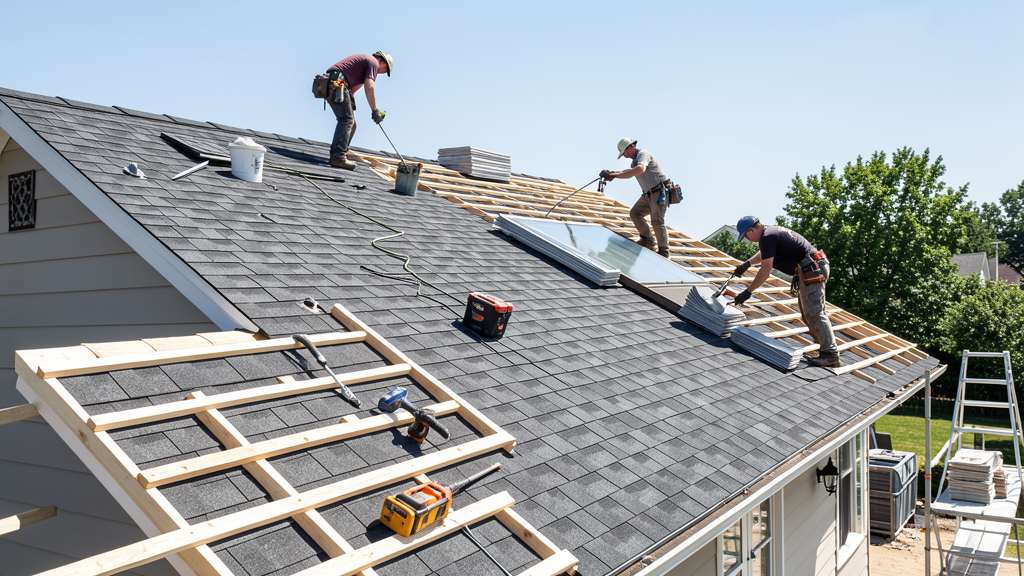
For a standard single-family home with asphalt shingles and no surprises, most crews finish in 1–3 days. Steeper pitches, larger footprints, or material changes can push it to 4–7 days. Severe weather, decking rot, or supply issues can pause the job entirely.
Here’s what happens each day and what causes the timeline to stretch.
Day-by-day timeline: the typical 1–3 day job
These numbers assume a 1,500–2,500 square foot home, asphalt architectural shingles, a moderate pitch, and a crew of 4–6 workers.
Day 1: tear-off and decking inspection
The crew arrives early. Usually 7:00–8:00 a.m. They set up tarps, debris chutes, and a dumpster or dump trailer. Tear-off begins immediately.
A standard roof generates 2–4 tons of debris. Removal of the old shingles, underlayment, and flashing takes 4–6 hours on a typical home. Larger or steeper roofs take longer.
Once the roof is bare, the crew inspects the decking. Soft spots, delamination, or rot get marked for replacement. You should get a count of damaged sheets before the crew leaves for the day.
Typical day 1 duration: 8–10 hours
What extends day 1:
- Multiple shingle layers. A roof with two layers takes nearly twice as long to strip.
- Steep pitch. Crews move slower and require safety rigging on pitches above 7/12.
- Dense decking rot. Finding widespread rot pauses the job for structural assessment.
Day 2: underlayment, flashing, and starter strips
With clean decking, the crew installs underlayment. Usually synthetic underlayment or felt paper, plus ice and water shield at eaves, valleys, and penetrations. Drip edge goes in along all roof perimeters.
Flashing work happens next: valley flashing, step flashing at walls, and pipe boot replacements. This is detail work. Rushing it causes leaks in year 5.
Starter strips run along the eaves and rakes to seal the first shingle row.
Typical day 2 duration: 6–8 hours
What extends day 2:
- Complex roof geometry. Multiple valleys, dormers, and wall junctions multiply flashing time.
- Custom metalwork. Copper or specialized valley flashing requires on-site cutting and fitting.
- Inaccessible areas. Sections over garages, porches, or tight setbacks slow material movement.
Day 3: field shingles, ridge cap, and cleanup
The crew installs the field shingles in rows, working from bottom to top. Standard architectural shingles on a 2,000-square-foot roof take 4–6 hours to lay. Ridge caps or ridge vent installation follows.
Cleanup includes a magnet sweep for nails, debris removal, and gutter clearing. A final walkthrough with the project manager confirms nothing was missed.
If a municipal inspection is required, it usually happens on day 3 or 4.
Typical day 3 duration: 6–8 hours
What extends day 3:
- High-wind nailing patterns. Coastal and hurricane zones require 6 nails per shingle instead of 4 — roughly a 30% time increase.
- Ridge vent conversions. Removing old box vents and converting to ridge vent adds cutting and framing time.
- Large surface area. A 4,000-square-foot roof simply requires more hours than a 2,000-square-foot roof.
Factors that extend the timeline
These are the most common reasons a “2-day job” becomes a 5-day job.
Roof size and complexity
| Home size (sq ft) | Typical squares | Asphalt shingle timeline |
|---|---|---|
| 1,200–1,800 | 12–18 | 1–2 days |
| 1,800–2,500 | 18–25 | 2–3 days |
| 2,500–3,500 | 25–35 | 3–4 days |
| 3,500–5,000 | 35–50 | 4–6 days |
| 5,000+ | 50+ | 5–8 days |
Complexity adds time beyond raw square footage:
- Multiple valleys: Each valley requires custom flashing and precise shingle cutting.
- Dormers and gables: More wall intersections mean more step flashing.
- Steep pitches: Above 7/12, crews work slower. Above 12/12, specialized equipment and fall protection are required.
- Tight lot access: Homes with fences, narrow driveways, or zero-lot-line setbacks limit material staging and dumpster placement.
Roofing material
| Material | Typical install time per square | Notes |
|---|---|---|
| Asphalt shingles | 2–3 hours | Fastest to install; standard crew proficiency |
| Metal shingles / standing seam | 4–6 hours | Precision fastening; custom cuts |
| Clay or concrete tile | 5–8 hours | Heavy; requires battens and careful placement |
| Slate | 6–10 hours | Specialized trade; few crews qualified |
| Wood shake | 4–6 hours | Hand-nailing; treatment requirements |
A material change during the project (for example, switching from asphalt to tile) almost always extends the timeline because the installation method, crew skill set, and structural preparation differ.
Decking replacement
When tear-off reveals rotten decking, the crew must remove and replace affected plywood or OSB sheets before underlayment goes down.
| Extent of rot | Additional time |
|---|---|
| 1–5 sheets | 2–4 hours |
| 5–15 sheets | 4–8 hours |
| 15+ sheets or structural damage | 1–2+ days; possible engineering review |
Rot is the #1 surprise that lengthens a roof replacement. You can’t predict it until the shingles are off.
Weather delays
Roofing is an outdoor job. Crews can’t install underlayment or shingles in rain, and they won’t remove the old roof if storms are imminent.
| Condition | Impact |
|---|---|
| Rain during tear-off | Tarps deployed; work paused until decking dries |
| Temperature below 40°F | Asphalt shingles don’t seal properly; adhesive activation fails |
| Temperature above 95°F | Shingles become soft and easily damaged; crew efficiency drops |
| High winds (25+ mph) | Unsafe for material handling; shingle blow-off risk |
| Snow or ice on roof | Work stops until melt and dry conditions return |
A single day of rain on a 3-day job usually pushes completion by 1 day, not just a few hours, because moisture on decking must dry before underlayment can be applied.
Permit and inspection scheduling
Most jurisdictions require a permit before work starts and an inspection after completion.
| Scenario | Typical delay |
|---|---|
| Permit already pulled | Zero impact |
| Permit pending approval | 2–10 business days |
| Inspector not available | 1–3 days |
| Failed inspection / corrections | 1–3 days |
Ask your contractor when the permit was issued and who schedules the inspection.
Supply delays
In 2024–2025, roofing material shortages caused 1–3 week delays in some regions. While supply chains have stabilized, custom-order materials (specialty colors, copper flashing, imported tile) still carry lead times.
| Material | Typical lead time |
|---|---|
| Stock asphalt shingles | Same day or next day |
| Custom color shingles | 1–2 weeks |
| Standing seam metal | 2–4 weeks |
| Imported clay tile | 4–8 weeks |
| Copper flashing/accents | 2–3 weeks |
Order materials before scheduling the crew. Never schedule tear-off with materials en route.
When delays are unavoidable vs. Preventable
| Unavoidable | Preventable |
|---|---|
| Weather | Crew showing up late or understaffed |
| Hidden decking rot | Contractor didn’t pull the permit in advance |
| Post-storm demand surge | Materials not ordered before job start |
| Municipal inspection backlog | No contract with start/completion terms |
The unavoidable delays are part of roofing. The preventable ones come from poor planning.
What homeowners should expect each day
| Day | What happens at your house | What you should do |
|---|---|---|
| Before Day 1 | Material delivery, dumpster drop | Verify shingle brand/color; move vehicles |
| Day 1 | Loud tear-off; debris removal | Stay reachable for decking damage updates |
| Day 2 | Underlayment and flashing work | Minimal disruption; keep pets inside |
| Day 3 | Shingle installation; cleanup | Final walkthrough when crew finishes |
| Day 4+ (if needed) | Inspections, corrections, or weather holds | Confirm next-day schedule with project manager |
When a longer timeline makes sense
A fast roof replacement isn’t always a good one.
Complex flashing detail. A roof with multiple chimneys, skylights, and wall intersections needs time to get the flashing right. A crew that promises 1 day on a complex roof is cutting corners.
High-end materials. Tile, slate, and standing seam metal require slower, more precise installation. These materials cost 2–4x more than asphalt. Rushing the install defeats the purpose of the investment.
Winter installation. If you must replace in cold weather, some contractors add a day to seal shingles by hand with roofing cement or wait for a warmer afternoon to install ridge caps. This is correct procedure, not a delay.
Historical or preservation requirements. Homes in historic districts often require approved materials, documentation, and specialized techniques. A 2-week timeline for a 1,500-square-foot roof in a historic district is normal.
When a shorter timeline makes sense
Standard ranch or cape cod. Single-story homes with simple gable roofs and no valleys are the fastest jobs. A skilled crew can absolutely finish in 1 day.
Emergency situations. Active leaks, structural compromise, or imminent weather events justify expedited schedules. Contractors can deploy tarps immediately and schedule permanent replacement within days.
Re-roof over one layer. Some jurisdictions allow a new layer over one existing layer. This eliminates tear-off and cuts the timeline roughly in half. But know this: most manufacturers discourage it, and it masks decking problems.
The bottom line
Most homeowners can plan for a 2–3 day roof replacement on a standard home. Budget 4–5 days if your roof is steep, complex, or over 3,000 square feet. Add another day or two if your contractor discovers decking issues or if weather interrupts the work.
The crews you want aren’t the ones promising next-day completion on complicated jobs. They’re the ones who communicate daily, explain what the decking looks like, and don’t rush the flashing. A roof done in 3 days by a careful crew outlasts a roof done in 1 day by a hurried crew. By a decade or more.
For more on what happens during installation, see our guide to the new roof installation process. For lifespan expectations by material, see how long does a roof last.
Frequently asked questions
Can a roof be replaced in one day?
Yes. Single-story homes under 2,000 square feet with asphalt shingles, good access, and a 4–6 person crew can often be completed in one day. The job still includes tear-off, decking inspection, underlayment, and new shingles. Any decking replacement or weather complication pushes it to day 2.
What is the longest a roof replacement should take?
For a standard residential job, anything beyond 7–10 days without a clear reason is excessive. Large estates, slate roofs, custom metalwork, or historical preservation work can run 2–3 weeks. Your contract should include a completion date or a clause explaining maximum reasonable duration.
Do roofing contractors work in the rain?
No competent crew tears off a roof in forecasted rain. Light drizzle during shingle installation is sometimes tolerated, but underlayment and decking must be dry. If rain starts during tear-off, tarps go down immediately and work pauses.
Should I be home during the roof replacement?
Not required, but be reachable by phone on day 1. That’s when decking surprises happen, and the project manager needs approval to replace wood beyond what was estimated. Being present for the final walkthrough is strongly recommended.
How does roof replacement time affect cost?
Time and cost are correlated but not linear. Day 1 (tear-off) is labor-heavy and expensive regardless of material. Day 2–3 costs depend on material choice and complexity. A 1-day job doesn’t always cost half of a 2-day job. Fixed costs like dumpster rental, permits, and mobilization apply regardless of duration.
Can I speed up my roof replacement?
You can prevent delays by: ordering materials early, clearing the driveway and perimeter, trimming overhanging branches, and confirming permit status before work starts. You can’t control weather or hidden decking issues. Budget an extra day in your planning, and any on-time completion is a bonus.