Signs of Roof Damage: What Homeowners Should Check First
How to spot roof damage early - from the ground, in the attic, and after a storm - before it reaches your ceiling.
Articles on this site may include sponsored content. If they do, it's labeled clearly - and it still has to answer a real homeowner question. Same bar as everything else here.
Signs of Roof Damage to Watch For
The first time most people notice roof damage, it’s because they saw something they weren’t looking for. A ceiling stain that wasn’t there last week. A shingle in the yard after a storm. A darker patch on the roof that catches the light differently.
If that’s you right now - something caught your attention and you’re wondering whether it’s real - here’s how to check it without getting on a ladder.
Where to start: the ground check
You can spot most active roof damage from the sidewalk with a pair of binoculars. That is not a shortcut. It’s the right way to start. Roof falls are the leading cause of home-maintenance injuries, and walking on an already-damaged roof can turn a small leak into a big one by breaking seals that were still intact.
If you want a repeatable room-by-room version before calling anyone, use the roof inspection checklist as your safer ground-and-attic pass.
Missing or lifted shingles
After a wind event - even a moderate thunderstorm - scan the whole roofline. You’re looking for gaps where a shingle used to be, or shingles that are bent upward at the corners rather than lying flat against the layer below.
A single missing shingle is not an emergency, but it is now the weakest point on your roof. Water will find it. One missing shingle becomes three after the next storm because wind gets under the edges around it.
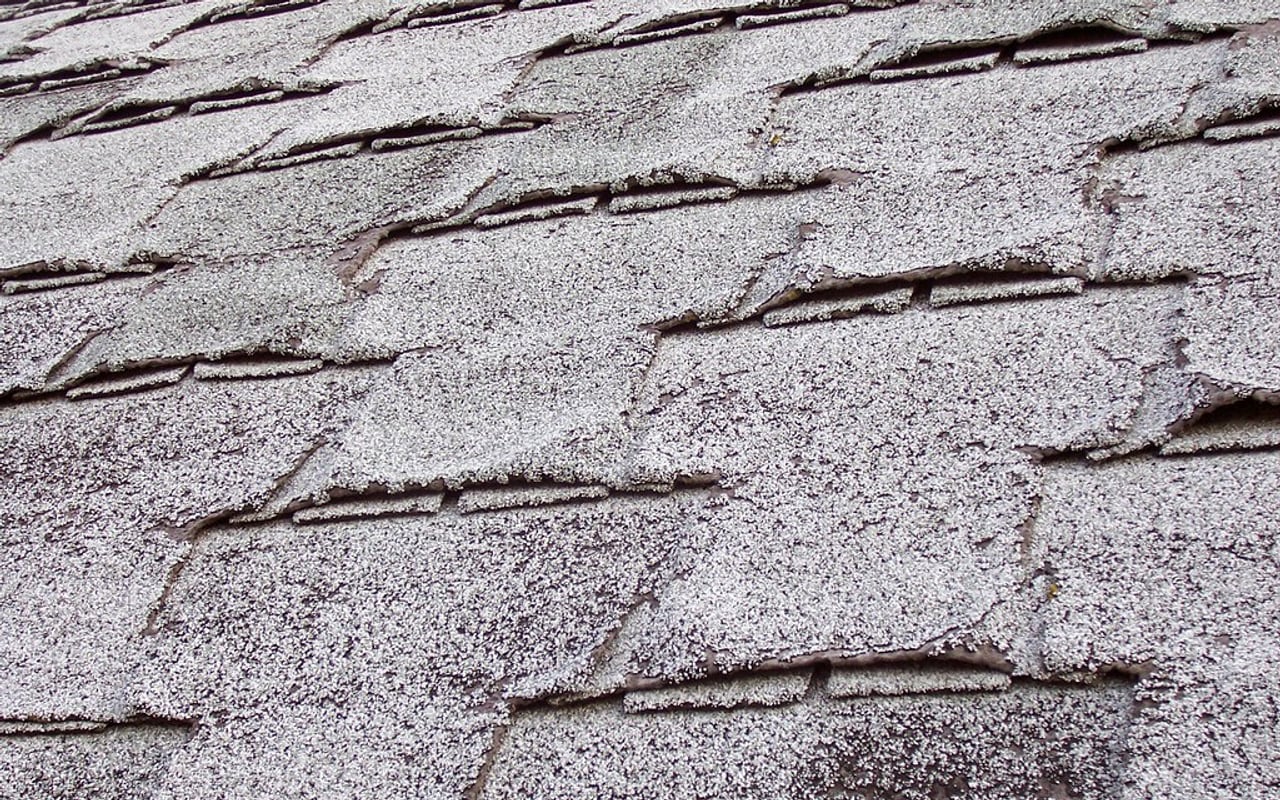
The more subtle version: shingles that were lifted and then settled back down but now have a visible crease - a sharp angle across the middle. That crease means the factory seal strip is broken. The shingle will not reseal itself. It will lift again in lighter wind the next time.
If the damage is widespread instead of one isolated tab, compare what you are seeing against the signs you need a new roof before assuming a small repair will solve it.
Granules in the gutters
Asphalt shingles are surfaced with ceramic granules. That’s what gives them their color and protects the asphalt from UV. When you see coarse black sand collecting in your gutters or at the bottom of downspouts, those are granules that have shed from the shingles above.
Some granule loss is normal on a new roof (a few tablespoons during the first year as loose granules shake free). Beyond that, it means the shingle surface is wearing. Heavy loss in one area often means a mechanical issue - something rubbing, or water backing up under the tabs.
Age changes how serious granule loss is, so it helps to know how long asphalt shingles last before you read the gutter as a warning sign.
Discolored patches and dark spots
Look at your roof surface at different times of day. Dark streaks that run vertically down the slope are usually algae, common in humid climates. Green patches are moss. Both hold moisture against the shingle surface and accelerate wear.
The ones to worry about more: localized dark spots that appear wet even when it hasn’t rained. That can mean the shingle has absorbed moisture through a crack or manufacturing defect. If you see a dime-sized dark spot from the ground and it’s still there three days after the last rain, it’s worth a closer look.
For prevention work that slows moss, algae, and wear, use the roof lifespan guide after you have ruled out active damage.
Sagging or uneven rooflines
Stand across the street and sight along the roofline. It should be straight. A visible dip, a wave, or a section that seems lower than the rest means the decking underneath has softened - almost always from prolonged moisture exposure. This is not a shingle problem. This is structural. It needs a professional evaluation.
What to check in the attic
The attic is where roof damage leaves a diary. Daylight entering the attic for the first time all year - not around a roof vent or chimney - means there is a gap in the roof deck. Water can track through the same gap.
Go up during the day, turn off all lights, and look up at the underside of the roof deck. Mark every spot where you see daylight. Then run your hand (carefully) around those areas. If the wood feels damp or softer than the surrounding area, that’s active water entry.
Water stains on rafters or the decking itself tell a timeline. Dark brown or black rings that feel damp are active. Older stains that have dried to a light brown or chalky texture mean the leak has since stopped or the material has dried out between rains. Either way, water has gotten through at that point.
Check insulation directly below roof valleys, chimneys, vent pipes, and wall intersections. Insulation that is compressed, discolored, or clumped into a hard mass is wet. Once insulation absorbs water, it loses its R-value permanently. You have to remove and replace it. This is the most commonly missed sign of a chronic slow leak.
What to look for after a storm
Storm damage is the most common driver of roof insurance claims. But the window for filing is limited - most policies require reporting within one year of the event. The sooner you document, the smoother the process.
If you are trying to decide whether the damage belongs in a claim, start with the homeowners insurance roof replacement guide before you call the carrier.
Hail damage
Hail leaves a specific mark: a round divot where the impact knocked granules off, sometimes with a soft spot you can feel if you run your hand over it. From the ground, look for random, circular dark spots scattered across the roof surface - not in a pattern. Hail strikes are random. Mechanical damage from walking on the roof tends to follow a path.
Hail damage is cumulative. Even if no single storm feels severe enough to warrant a claim, three hailstorms over five years can reduce shingle life by years. The damage adds up.
Check your gutters after a hailstorm. Heavy granule loss from hail looks different from normal shedding - more sudden, more concentrated, often with a few dings in the gutter metal itself.
Wind damage
Wind damage concentrates at the roof edges and ridge. Look for:
- Shingles that are creased or lifted near the ridge cap
- Edges curling upward along roof perimeter
- Debris in the yard (shingles, flashing pieces)
- Loose or dangling flashing around chimneys or vents
A good test: after a wind event, look at the ridge line especially. If ridge cap shingles shifted even slightly, the nails are now exposed to water entry.
Document everything with ground-level photos. Do not walk on a wet or wind-damaged roof. It’s dangerously slippery and the underlying damage can make the structure unpredictable.
Debris impact
Fallen branches don’t always punch through. Sometimes they slide across the surface and abrade the granules at multiple points along the path. That scuffing wears the protective surface off and creates several new weak spots from a single event.
If a branch fell across your roof, inspect the full run. Not just where it landed.
When to call a professional
You can identify most roof damage yourself using these checks. There are a few situations where a paid inspection is worth the cost before you do anything else:
Call an inspector when:
- You see any sag or dip in the roofline
- You’re preparing an insurance claim - contractors who work with adjusters know what documentation the carrier needs
- A leak has been active for more than 48 hours
- Your roof is over 15 years old and hasn’t had a professional look in the last three years
- You see daylight in more than one spot through the attic decking
A roof inspection costs $150 to $300. Some roofers offer free inspections as part of their estimate and deduct the cost from any work you approve. For insurance claims specifically, pay for a dedicated inspection from a roofer who has worked with adjusters before. The documentation they provide makes a measurable difference in whether the claim is accepted.
If you are not sure what a professional should check, read what is a roof inspection before you schedule the appointment.
What happens if you wait
Water is patient. It will find the lowest point. Inside your attic, water migrates along rafters and can show up inside your house feet from the actual roof entry point. By the time you see it on a ceiling, the water has already soaked through decking, insulation, and drywall.
Here is what that costs:
- Simple shingle repair: $200 to $600
- Repair with decking replacement: $800 to $2,500
- Full leak repair with drywall and insulation: $3,000 to $7,000
- Structural repair for long-term water damage: $5,000 to $20,000+
The earlier you catch it, the cheaper it is by roughly an order of magnitude per stage.
For leak-specific repair ranges, compare the numbers against roof leak repair cost. If the damage is bigger than a patch, use roof repair vs replacement to decide what question to ask the roofer next.
Bottom line
You do not need to get on your roof to check for damage. Binoculars from the ground, a visual check of the attic, and good documentation after a storm will catch 90 percent of problems early enough to avoid major cost. If you see sagging, daylight through the decking, or an active leak that has been going more than two days, call a licensed roofer.
[Reader: something went wrong, or might have. That’s what this guide is for - to help you figure out what you’re looking at and whether it can wait or needs attention now.]
Frequently asked questions
Can I walk on my roof to inspect for damage?
You should not unless you have done it before and know the surface condition. Worn shingles are slippery when dry and dangerously slick when wet. Each footstep risks cracking aged shingles or breaking the seal on ones that are still intact. Use binoculars from the ground. If you need a closer look, hire a professional - they have safety gear and know where to step.
How soon after a storm should I inspect for roof damage?
Within 24 to 48 hours if you are able. Take photos from the ground immediately - document the condition before anything gets worse. If you see visible damage, a tarp from a roofer costs a few hundred dollars and can prevent thousands in secondary water damage while you line up the repair.
Does home insurance cover all roof damage?
No. Homeowners insurance covers sudden, accidental damage from named perils: wind, hail, fire, falling trees or branches. It does not cover gradual wear and tear, aging, or damage from lack of maintenance. A roof that leaked because the shingles wore out is not a covered event. A roof that leaked because a tree branch went through it during a windstorm is. The distinction matters, and it comes up often in claims.
How do I tell hail damage from normal wear?
Hail damage is random - scattered impacts across the roof surface with no pattern. Normal wear follows a pattern: south-facing slopes wear faster from UV, granules accumulate evenly in all gutters, and damage concentrates at edges and ridge rather than across the field of the roof. If you see a single area with concentrated impact marks and the rest of the roof is fine, that is mechanical damage, not hail.
Should I tarp my own roof if I find damage?
Only if you know what you are doing and the roof is dry. A tarp secured incorrectly can channel water into the house instead of away from it. If you have an active leak and rain is forecast, call a roofer for an emergency tarp service. It is not expensive relative to the damage it prevents.