The Complete Homeowner's Guide to Roof Replacement
A plain-spoken guide to roof replacement: costs, materials, insurance, contractors, installation, warranties, and caring for your new roof.
Articles on this site may include sponsored content. If they do, it's labeled clearly - and it still has to answer a real homeowner question. Same bar as everything else here.
The Complete Homeowner’s Guide to Roof Replacement
You will replace your roof once, maybe twice, in the time you own your home. It costs more than a car, takes less time than a kitchen renovation, and exposes your house to the weather while the work is underway. Most homeowners enter the process knowing two things: their roof is old, and they don’t want to get ripped off.
This guide gives you the whole picture - from the first moment you suspect your roof is failing, to the day the crew pulls off your property and you’re left with a roof that should outlast your mortgage. You’ll learn when replacement is necessary versus when repair will do, what you’ll actually pay, how to choose materials that match your budget and climate, how to navigate insurance, how to hire a crew you can trust, what the days on your property look like, and how to protect your investment once the work is done.
Signs you need a new roof
A roof doesn’t die on a schedule. Some houses need replacement at 18 years. Others push past 30. The difference usually comes down to material quality, installation competence, attic ventilation, and regional weather. Your roof doesn’t fail overnight - it sends signals. Here’s what to watch for.
Visual signs from the ground
Start with a walk around your house on a sunny day. Binoculars help. Look for shingles that are curling at the edges, cracking, or missing granules. If you see bald spots where the dark asphalt mat is showing through, the shingles have lost their protective grit. Granules in your gutters - by the handful after every rain - confirm the surface is eroding.
Check for shingles that are lifting or buckling. This often indicates trapped moisture in the decking or inadequate ventilation baking the roof from underneath. If you see multiple shingles in this condition across more than one slope, you’re past the point of spot repairs.
Signs from inside
Go into your attic on a bright day. If you see daylight coming through the roof deck, water is already finding its way in. Look for water stains on ceiling surfaces underneath the attic - those brown rings tell you where leaks have happened and where they’ll happen again. Dark trails on rafters or decking indicate slow, persistent moisture intrusion that’s been active for months.
Check for mold or mildew smell in the attic. Musty odors suggest moisture is accumulating faster than your ventilation can expel it, which accelerates shingle degradation from underneath. If your attic insulation is wet or matted down in spots, you have active leaks that need addressing.
Age and neighborhood context
Asphalt architectural shingles typically last 22 to 30 years. Three-tab shingles last 15 to 20. If your roof is approaching those milestones and showing any of the signs above, replacement should be on your radar.
Your neighbors can be an unexpected clue. In subdivisions built at the same time, roofs tend to fail within a two- to three-year window of each other. If the houses around yours are all getting new roofs, yours is likely on the same schedule. For a narrower checklist of early warning signs, start with new roof signs.
When repair still makes sense
Repair is the right call when damage is isolated - one slope, one valley, or around a single penetration like a vent or chimney. If the roof is under 15 years old and the shingles are still pliable, targeted repairs can buy you years. A competent contractor can often patch flashing, replace a few shingles, and seal around a vent boot for a few hundred dollars. Don’t let anyone talk you into a full replacement just because they showed up to fix one leak. If the rest of the roof is sound, you’ve got time. If you’re still split between patching and tearing off, compare the warning signs in roof repair vs. replacement.
Budgeting for your new roof
The national average for asphalt shingle roof replacement in 2026 sits between $8,500 and $16,000 for a standard single-family home. That range is meaningful only as a starting point. Where you live, the complexity of your roof, and the material you choose create spreads that can double or triple the price.
Regional cost ranges (asphalt architectural shingles, tear-off included)
| Region / Metro | Low-end (simple ranch) | Mid-range (standard home) | High-end (complex/steep) |
|---|---|---|---|
| Rural Midwest (OH, IN, IA) | $6,500-$9,500 | $9,000-$13,500 | $14,000-$19,000 |
| Southeast (GA, AL, NC) | $7,000-$10,500 | $10,000-$15,000 | $16,000-$22,000 |
| Southwest (AZ, NV, NM) | $7,500-$11,000 | $11,000-$16,500 | $17,000-$24,000 |
| Texas metros (Houston, DFW, Austin) | $8,000-$12,000 | $12,000-$18,000 | $19,000-$26,000 |
| Northeast (PA, NY, MA) | $9,000-$13,500 | $13,500-$20,000 | $22,000-$30,000 |
| Pacific Northwest (OR, WA) | $9,500-$14,000 | $14,000-$20,500 | $23,000-$32,000 |
| California (outside Bay Area) | $10,000-$15,000 | $15,000-$22,000 | $25,000-$35,000 |
| Bay Area / Los Angeles | $12,000-$18,000 | $18,000-$28,000 | $30,000-$45,000 |
These figures assume architectural asphalt shingles on a home between 1,600 and 2,400 square feet of footprint. Metal roofing generally runs two to three times the cost of asphalt. Clay or concrete tile runs 1.5 to 2.5 times and often requires structural reinforcement that can add $3,000 to $10,000. For a deeper side-by-side look at the tradeoffs, see best roofing materials compared.
What drives the price up
Steep pitch. A 10/12 or 12/12 pitch slows the crew, requires scaffolding or staging, and increases labor hours by 20 to 40 percent. Steep roofs are harder to walk, slower to strip, and riskier to work on.
Complexity. Multiple dormers, valleys, chimneys, skylights, and wall intersections mean more flashing, more cuts, and more time. Each penetration is a potential future leak point, and good contractors spend serious time getting them right.
Access. Limited truck access, tight setbacks, or power lines nearby require hand-carrying materials and creative dumpster placement. The more manual handling required, the higher the labor component.
Decking replacement. Once the old roof is off, the plywood or OSB decking gets inspected. Soft or delaminated sheets get replaced. Budget $60 to $120 per sheet installed. Most roofs need 5 to 15 sheets. Bad ones need 30 or more. This is the most common “surprise” cost in roof replacement.
Code upgrades. Codes have tightened since your current roof was installed. Your jurisdiction may now require drip edge, ice and water shield at eaves, specific nailing patterns, or upgraded underlayment. These aren’t optional if the inspector catches them, and they add material and labor. If you’re not sure what your city requires, check roof replacement permit requirements.
The cheapest estimate is rarely the cheapest job
A bid that comes in 25 percent below the others usually omits something: tear-off, underlayment, permit fees, disposal, or a proper cleanup. Some crews bid low to get the contract, then find “surprise” decking damage to inflate the final invoice. Get itemized estimates. Compare line items, not totals. If one estimate is dramatically lower, ask why - and don’t accept “we’re just more efficient” as an answer. Use how to read a roofing estimate before you compare bids side by side.
Choosing the right roofing material
For most U.S. homeowners, the decision narrows to asphalt shingles, metal, or tile. Wood shake and natural slate are valid choices in specific markets but remain niche. If you’re still learning the categories, the guide to types of roofing shingles is the right place to start. Here’s the practical breakdown.
Material comparison
| Material | Installed cost per sq ft | Lifespan | Best climate | Best homeowner profile |
|---|---|---|---|---|
| 3-tab asphalt | $4-$5 | 15-20 years | Moderate | Tightest budgets; selling within 5 years |
| Architectural asphalt | $5-$7 | 22-30 years | Most U.S. climates | Default choice for most replacements |
| Luxury asphalt | $7-$10 | 30-40 years | Moderate | Premium look without metal or tile cost |
| Metal (standing seam) | $9-$16 | 40-70 years | Hot, snowy, fire-prone | Staying 20+ years; low lifecycle cost priority |
| Concrete tile | $7-$12 | 50-75 years | Warm, dry | Spanish or Mediterranean architecture |
| Clay tile | $9-$15 | 50-100 years | Warm, dry | Historic or high-end custom builds |
Asphalt shingles remain the default in 2026 because they work. Architectural shingles - the dimensional, laminated type - have largely replaced three-tab as the standard. They cost 20 to 30 percent more but last 5 to 10 years longer and handle wind significantly better. If you’re staying in your home more than 10 years, the upgrade pays for itself. The architectural shingles buyer’s guide explains what changes when you step up from basic shingles.
The asphalt market has shifted toward “cool roof” granules and solar-reflective surfaces. These aren’t necessary in every climate, but in hot regions like Phoenix or Austin they measurably reduce attic temperatures, which means less load on your air conditioner and slower degradation of the decking below the shingles.
Metal roofing makes sense when you plan to own the home long enough to amortize the upfront premium. In hot climates, it reflects solar heat. In snow country, it sheds loads. In wildfire zones, it’s noncombustible. The upfront cost stings, but the cost per year over a 30-year horizon is often lower than asphalt. If you’re in your forever home, run the math. If the main decision is premium metal versus standard shingles, the metal roof vs. asphalt shingles comparison goes deeper on cost, lifespan, and resale fit.
Tile is beautiful and durable but heavy. Many homes built with asphalt shingles lack the structural capacity for tile without reinforcement. If you want the look, get a structural engineer’s assessment before you fall in love with the material. I’ve seen homeowners spend $8,000 on engineering and reinforcement before a single tile was delivered.
Hiring a roofing contractor
The contractor you choose matters more than the shingle brand. A mediocre shingle installed by a careful crew lasts longer than a premium shingle installed by hacks. This is the most important decision in the entire process. When you start building your shortlist, use the more detailed guide on how to choose a roofing contractor.
Minimum vetting checklist
License. Verify it with your state or county licensing board. Not all states license roofing contractors, but most do. A license number means they’ve met baseline requirements.
Insurance. General liability insurance of at least $1 million. Ask for a certificate of insurance naming you as an additional insured during the project. Workers’ compensation insurance is equally important - if a crew member gets injured on your property and the contractor lacks coverage, your homeowner’s policy gets tapped.
Local presence. A local physical address and a phone number that reaches a human being who has been in business for years. Storm chasers work from hotel rooms and P.O. Boxes. A local office doesn’t guarantee quality, but it guarantees someone is there when a warranty issue comes up.
References. Call two recent customers and one from three to five years ago. Ask: Did they show up on time? Was the cleanup thorough? Have you had any leaks since the work? The three-to-five-year reference is the most informative - problems show up after a few seasons of weather.
Three red flags to walk away from
- Pressure to sign immediately. A contractor who discounts the price “only if you sign today” is running a sales tactic, not a roofing business. Legitimate estimates are valid for at least a week.
- Requests large upfront payment. Never pay more than 30 percent before work begins. Many established contractors require no deposit at all. Never pay the full balance before completion and your own visual inspection.
- Won’t put it in writing. A handshake or verbal quote isn’t a contract. The scope, materials, timeline, payment schedule, and warranty terms belong on paper. If they resist documenting the agreement, you’ve already learned something important about how they operate.
Beware the storm chaser
After major hail or wind events, out-of-town contractors descend on neighborhoods with door-knocking crews and temporary office space. They collect deductibles, subcontract the work to whoever shows up, and vanish when callbacks come in.
Signs you’re talking to a storm chaser: out-of-state license plates on company trucks, offers to “absorb your deductible” (which is insurance fraud), high-pressure tactics tied to the recent storm, or requests to sign an Assignment of Benefits giving them direct negotiation rights with your insurer. Some states have banned AOBs for exactly this reason.
Local contractors built their reputation over years. Storm chasers built their marketing budget over weeks. There’s a difference, and it shows in the quality of the finished roof.
Questions that separate professionals from pretenders
- “Will you replace the flashing or reuse it?” Reused flashing saves money and causes leaks. Specify new flashing in the contract.
- “Who pulls the permit?” The answer should be “We do.”
- “What’s your per-sheet rate for decking replacement?” A professional gives you a rate in the estimate, not a surprise on day two.
- “Who will be the on-site supervisor?” You want a designated foreman on-site every day, not a rotating cast of day laborers with no clear leader.
If you want a fuller interview list before signing, use questions to ask a roofer.
The roof replacement process
Understanding the sequence helps you know what’s normal and what’s a problem. A standard asphalt roof on a 2,000-square-foot home takes one to three days from tear-off to final cleanup. Add a day if significant decking needs replacement. Metal roofs take two to five days. Tile takes five to ten days. For planning the calendar around the crew, see the roof replacement timeline. For a tighter day-by-day walkthrough of the job itself, read the new roof installation process.
Before the crew arrives
Materials arrive one to two days early. Shingle bundles, underlayment rolls, and vents will be stacked on your driveway or a tarped area of your yard. Verify the brand and color before installation starts. Distributors make mistakes. Contractors order the wrong line. Check the label on a bundle against your contract while you can still send it back.
Move cars out of the garage and driveway. Falling debris and nails travel 20 feet or more. If you have a lawn you care about, ask whether the crew will use plywood paths over grass. Dumpsters should sit on boards to protect the driveway. Flag any satellite dishes, security cameras, or gutter guards with the project manager before day one.
Day one: tear-off and decking inspection
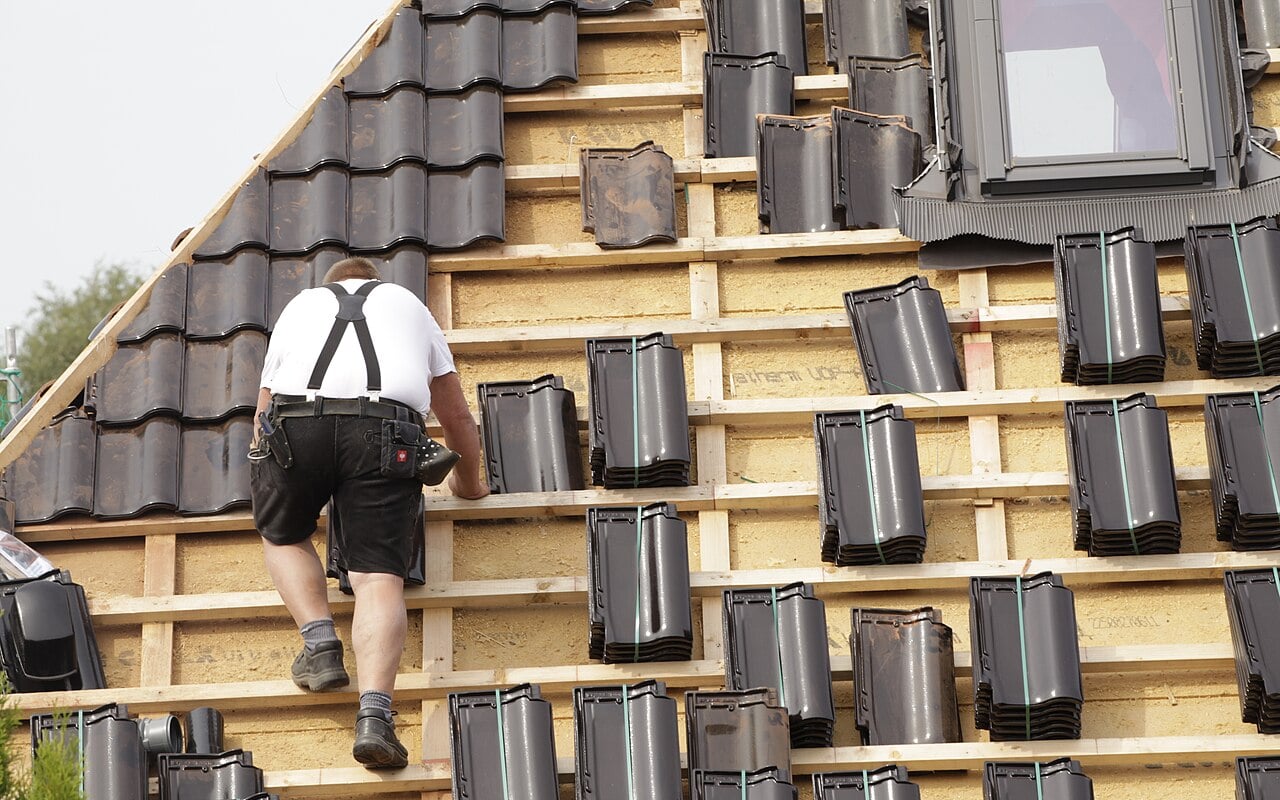
The crew strips the old roof. It’s loud - expect hammering and debris from early morning to late afternoon. A standard roof generates two to four tons of debris. The crew should use tarps or chutes to protect your siding, landscaping, and walkways.
Once the decking is exposed, the foreman inspects every sheet for soft spots, delamination, and rot. The foreman should tell you how many sheets need replacement before the day ends. You should not discover this from the final invoice.
Day two: underlayment, ice shield, and flashing
The underlayment goes on next - either asphalt-saturated felt or synthetic. Synthetic is lighter, stronger, and handles longer UV exposure if shingles aren’t installed immediately. Ice and water shield, a rubberized membrane, gets applied at eaves, valleys, and around penetrations in cold-climate zones. Many codes now require it.
New drip edge goes along eaves and rakes. New flashing goes around chimneys, walls, and vents. Reused flashing is a common corner-cutting move. If you see someone prying off old flashing and straightening it with pliers, stop the work and call the project manager.
Day three: shingle installation and finishing
Shingle installation typically takes one to two days. Crews work from the bottom up, following manufacturer nailing patterns. Six nails per shingle is standard in wind zones. Four nails is adequate in calm areas but insufficient for upgraded manufacturer warranties.
Ridge vents and ridge cap shingles go on last. Ridge vent installation is a common place for shortcuts - if the vent isn’t cut properly or the cap is nailed too tightly, ventilation suffers and your shingle warranty may be voided.
Cleanup includes a magnetic nail sweep of the yard and driveway, debris removal, and gutter clearing. Walk the entire property with the foreman before making final payment. Check the driveway, flower beds, and patio for stray nails.
Final inspection
Most jurisdictions require a municipal inspection after completion. The inspector checks nailing patterns, flashing details, and code compliance. Don’t make final payment until the contractor confirms the inspection passed. If you’re in an area without municipal inspections, do your own detailed walkthrough using a roof inspection checklist.
What to expect during installation
Real talk about living through a roof replacement. You can stay in your house - your power and water stay on - but the noise is constant. Hammering, nail guns, compressors, debris hitting the ground. It starts early, usually around 7 a.m., and runs until late afternoon. If you work from home, plan to work elsewhere for at least two days. For the tighter day-by-day version, use the guide to how long it takes to replace a roof.
Pets and children. The noise and unfamiliar people on the property stress most animals. A vibrating house from overhead hammering terrifies some dogs. If you can board your pets or keep them in a quiet basement room, do it. Keep kids out of the yard entirely while work is overhead.
Vibration. You will feel the house shake when the crew is working directly above certain rooms. This is normal. Hanging pictures or shelves during the job is not recommended - wait until the crew moves to a different section.
Debris. Despite tarps and magnetic sweeps, you’ll find nails in your yard days or weeks afterward. A good contractor does multiple sweeps. A great contractor comes back after the first rain to sweep again, since rain exposes what was missed. Keep a magnet handy and do a walk of your own.
Weather. Weather is the most common cause of delay. A crew won’t tear off a roof if rain is forecast within the window needed to dry-in. Most contractors monitor forecasts and build in buffer days. Don’t push them to start if conditions look risky. A wet attic costs more than a two-day delay. If schedule flexibility matters, compare the pros and cons in the roof replacement season guide.
Understanding warranties
Roof warranties confuse homeowners because there are two separate layers: the manufacturer’s warranty on materials and the contractor’s warranty on workmanship. They cover different things, and neither covers everything. The deeper breakdown is in roof replacement warranty coverage.
Manufacturer warranties
Standard manufacturer warranties on architectural shingles cover manufacturing defects for the “lifetime” of the product - often 30 to 50 years in marketing terms. But what you actually get depends on the fine print.
Material-only coverage pays for defective shingles but not installation labor. If your roof leaks because of poor installation, the manufacturer isn’t liable.
System warranties require using the manufacturer’s full accessory system - underlayment, starter strips, ridge caps, and sometimes specific ventilation products. These can extend to 50 years on materials and may include limited labor coverage for manufacturer-caused failures. They cost more but offer better protection.
Prorated vs. non-prorated. Early years often offer full replacement value. Later years pay only a depreciated percentage. Read the schedule - a 50-year warranty that’s fully prorated after year 10 isn’t as valuable as it sounds.
Transferability. Some warranties transfer to a new owner if you sell. Others don’t. If selling within the warranty period matters to your plans, check the transfer terms.
Workmanship warranties
The contractor warranties their own installation, typically for two to ten years. A five-year workmanship warranty is standard for established contractors. Ten years is strong. “Lifetime” workmanship warranties from small outfits should be viewed skeptically - ask yourself whether they’ll still be in business.
A workmanship warranty covers leaks caused by installation errors: poor flashing, missed nails, improper overlap. It does not cover storm damage, foot traffic damage, or material defects.
Here’s the key insight most homeowners miss: if your roof leaks in year three because a vent boot was installed crooked, the manufacturer won’t help you. Your only recourse is the contractor’s workmanship warranty. That’s why the contractor’s local reputation and business longevity matter more than the shingle brand’s marketing materials.
Read the workmanship warranty document before you sign the main contract. Some contractors define “leak” narrowly, excluding leaks from wind-driven rain or condensation. Others require notification within 48 hours of discovering water intrusion. Reasonable terms exist, but they vary. Get the document early.
Post-install: caring for your new roof
You just spent thousands of dollars on a new roof. A little routine care will make sure it delivers the full lifespan you paid for.
Keep gutters clean. Clogged gutters cause water to back up under the shingles at the eaves and can rot the decking. Clean gutters at least twice a year - more if you have overhanging trees. Consider gutter guards if cleaning is difficult or dangerous on your property.
Trim overhanging branches. Trees rubbing against shingles wear away the protective granules. Falling branches can puncture the roof. Keep branches trimmed at least six feet from the roof surface.
Inspect after severe weather. After a major storm, do a ground-level walkaround. Look for missing shingles, displaced flashing, or debris that may have damaged the surface. Catch small problems early while they’re still simple to fix.
Maintain attic ventilation. Your new roof depends on proper airflow to regulate temperature and moisture. Make sure soffit vents aren’t blocked by insulation and ridge vents aren’t obstructed. A well-ventilated attic extends shingle life by years.
Keep the roof clean of moss and algae. In humid climates, moss and algae growth can trap moisture against shingles and shorten their life. Zinc or copper strips installed at the ridge prevent growth as rain washes over them. Avoid pressure washing shingles - it strips granules and voids most warranties.
Schedule a professional inspection every three to five years. A roofing professional can spot developing issues - loose flashing, cracked boots, granule loss - that you won’t see from the ground. An inspection costs $100 to $200. Catching one small problem early can save thousands. For a seasonal routine you can actually follow, use the complete roof maintenance guide.
Frequently asked questions
How do I know if my roof needs repair or replacement?
If the roof is under 15 years old and damage is isolated, repair is usually the right call. If it’s over 20 years old, shows widespread wear, or has multiple leak points, replacement is the smarter long-term play. An independent roof inspection - not a contractor’s free estimate - gives you an unbiased answer.
How much does a new roof add to home value?
A new roof typically recovers 60 to 70 percent of its cost in resale value according to remodeling industry data. A $15,000 roof might add $9,000 to $11,000 to the sale price. The bigger benefit is salability - homes with new roofs sell faster and attract more offers than homes with obvious roof issues.
Can I stay in my house during roof replacement?
Yes, but plan for it. The noise runs from early morning to late afternoon. Pets and young children often find it stressful. You won’t lose power or water, but you should stay out of the yard while work is overhead. If you work from home, plan to work elsewhere for the tear-off day at minimum.
What time of year is best for roof replacement?
Spring and fall are busiest because weather is mild and predictable. Summer works but crews start early to beat the heat. Winter is possible in most regions if temperatures stay above 40°F for shingle sealant activation, though ice and shortened days slow progress. Late fall and winter sometimes offer slightly lower pricing due to reduced demand.
How long do I have to file an insurance claim after storm damage?
Most policies require claims within 12 months of the event, but some specify six months or even 60 days. Check your policy declarations page. File promptly - delays give insurers grounds to argue the damage worsened due to neglect. Document everything with photos before you call. For claim-specific details, read homeowners insurance and roof replacement.
Should I get an independent inspection before hiring a contractor?
Yes, if you have any doubt about whether replacement is necessary. A third-party home inspector or structural engineer costs $200 to $500 and provides documentation you can use when evaluating contractor recommendations. It removes the conflict of interest inherent in a contractor telling you that you need a new roof.
What happens if the contractor finds rotten decking after tear-off?
This is common and should not be a surprise. A professional contractor includes a per-sheet decking replacement rate in their estimate - typically $60 to $120 per sheet. They should communicate how many sheets need replacement before the end of the tear-off day and get your approval before proceeding. If the contractor never mentioned decking replacement as a possibility in their estimate, that’s a red flag.
How do I find the right color for my new roof?
Start by looking at what your neighbors have. The roof should complement your home’s exterior - brick, siding, trim, and stone all interact with roof color. Most manufacturers offer online visualization tools where you can upload a photo of your home and try different colors. Many supply houses have sample boards you can take home. If you’re in an HOA, check approved color palettes before you choose. A roof color is a 25-year commitment - don’t rush the decision.
How soon can I walk on my new roof after installation?
For asphalt shingles, manufacturers recommend waiting until the sealant strips have fully bonded, which takes one to three days in warm weather and longer in cooler conditions. Minimize roof traffic entirely. Every footstep dislodges granules and stresses the sealant bonds. If you need to access the roof for antenna installation or chimney work, have your contractor do it or wait at least a full week.
The bottom line
Replacing a roof is one of the largest maintenance expenses you’ll face as a homeowner, but it’s also one of the most straightforward when you know what to expect. Replace when the roof can no longer keep water out - not when a salesperson says it’s “time.” Pay for quality installation over premium marketing. Get multiple itemized estimates. Verify insurance and licensing. Understand your warranty before you sign. And stay involved during the process. The contractor works on your house, but you own the result.
A good roof doesn’t impress the neighbors. It just does its job, quietly, for 25 years. That’s what you’re paying for.